Posted on Leave a comment

Boston Firearms Safety Course Guide

Boston Firearms Safety Course Guide

Boston Firearms Safety Course Guide

Massachusetts law requires a Firearms Safety Course certificate to apply for a License to Carry (LTC) or Firearms Identification Card (FIC). Without that certificate from a state-certified instructor, your application at the Boston Police Licensing Unit won’t even be processed. This isn’t a suggestion; it’s the mandatory first step.

Understanding Massachusetts’ Basic Firearms Safety Course

The state-mandated curriculum is specific. It’s not a marksmanship class. Over a minimum of four hours, a certified instructor will cover Massachusetts firearms law (M.G.L. c. 140), safe handling, storage, and transportation. You’ll learn the operational mechanics of revolvers, semi-automatic pistols, rifles, and shotguns. The course concludes with a written test—typically 50 true/false or multiple-choice questions. Passing earns you the official certificate, valid for life for licensing purposes. Many Boston-area instructors, like those at Mass Firearms School in Holliston or at local rod and gun clubs, integrate live-fire sessions, but the state only requires the classroom component for the basic certificate.

Why Live-Fire Training is Non-Negotiable

Passing the written test proves you know the rules. Live-fire training teaches you how to apply them under real conditions. Handling an unloaded firearm in a classroom is one thing; managing recoil, muzzle discipline, and trigger control with live ammunition is another. This is where fundamental skills like the Isosceles stance, proper grip, and sight alignment become muscle memory. A quality course will have you shooting .22LR or 9mm pistols and .223 rifles under direct supervision. This experience is critical before you make a purchase. At Highbridgearmory, we see informed buyers who’ve had this training—they ask better questions about models like the ZEV OZ-9C Hyper-Comp or a basic Glock 19 because they understand the platform’s function and safety features.

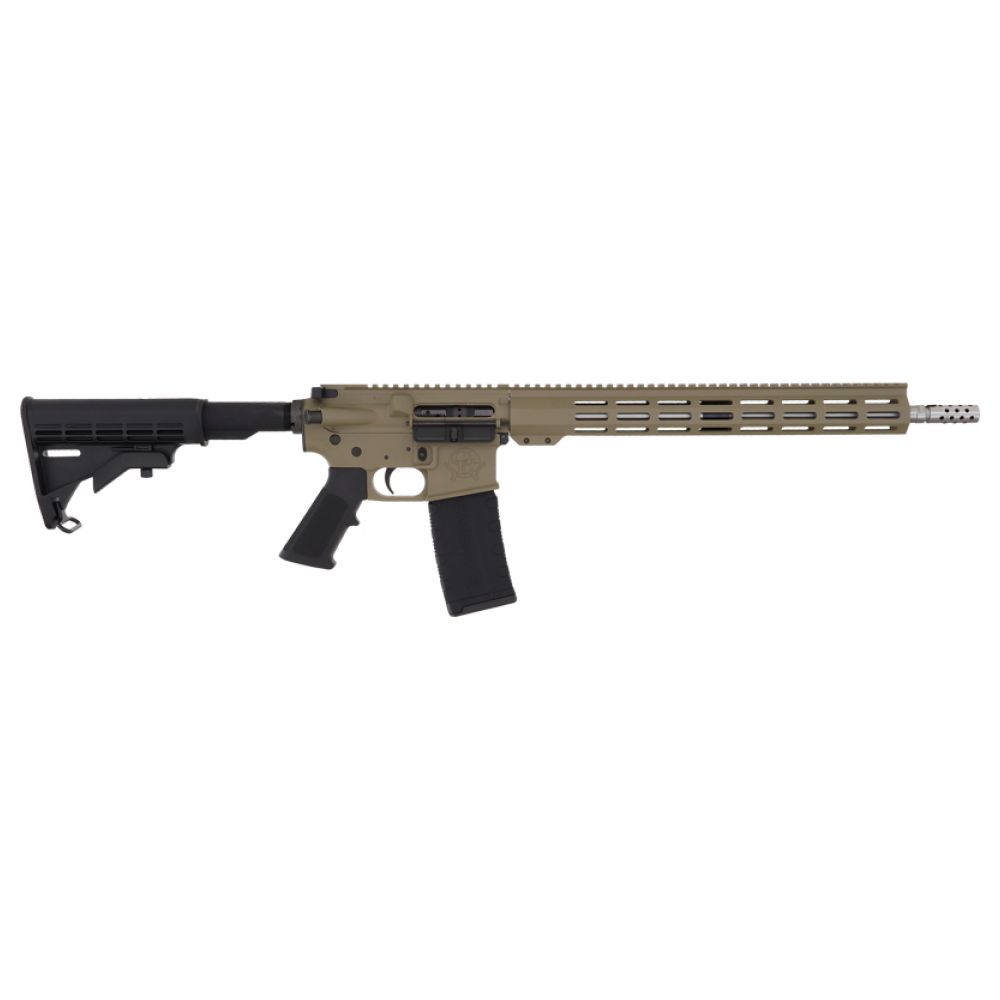
FDE AR-15 Complete Rifle Flat Dark Earth

Beyond the Basics: Advanced Courses in the Boston Area

Once you have your LTC, your education should not stop. Advanced courses address the gaps left by the basic class. Look for Defensive Pistol 1, which covers drawing from a holster, shooting while moving, and low-light fundamentals. Force-on-force scenarios using simunitions provide invaluable stress inoculation. For rifle owners, a carbine course teaching malfunction drills, transitions, and shooting from barricades is essential. Facilities like the Sig Sauer Academy in Epping, NH, or The Range in Medway offer these tiers of instruction. This training directly informs your gear choices. After a carbine course, you’ll appreciate why a reliable optic and a quality two-point sling on an AR-15 platform are necessities, not accessories. It also clarifies your ammunition needs, pushing you towards proven defensive loads rather than just the cheapest range fodder.

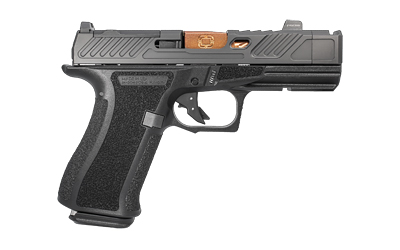
ZEV Technologies OZ-9C Hyper-Comp Semi-Automatic 9mm Pistol

Selecting the Right Instructor and Facility

Not all courses are created equal. Your instructor’s background is paramount. Seek out active or former law enforcement, military, or competitive shooters with verifiable credentials. Visit the facility beforehand. A clean, well-organized range with clear safety protocols speaks volumes. Ask about class size—smaller ratios mean more individual attention. Read reviews specifically about the instructor’s teaching ability and adherence to safety. Remember, you’re not just buying a certificate; you’re building a foundation. The right instructor will explain *why* a rule exists, like the legal intricacies of transporting a firearm in Massachusetts, which is as important as knowing how to clear a jam on your rifle. This foundational knowledge impacts every purchase decision you’ll make, from the firearm itself to the appropriate ammunition for its intended use.

Winchester Deer Season XP Ammunition 300 AAC Blackout

FAQs on Boston Firearms Safety Courses

Where can I take a firearm safety course?

You must take it from a Massachusetts State Police-certified instructor. These are offered at dedicated schools like Mass Firearms School in Holliston, The Range in Medway, and at many local rod and gun clubs such as the Andover Sportsmen’s Club or Woburn Sportsmen’s Association. Always verify the instructor’s certification is current with the MA State Police Firearms Records Bureau.

How much is a firearms safety course?

Prices vary by instructor and inclusions. A basic 4-hour classroom-only course typically runs between $100 and $150. Courses that include live-fire training, rental equipment, and ammunition usually cost between $200 and $350. Advanced defensive courses are more, often ranging from $400 to $600 for a full-day session.

Browse our firearms collection

Last updated: April 20, 2026

Posted on Leave a comment

Firearms and Ammo: The Core System

In Stock: Hornady Critical Defense 9mm Luger Ammo 115 Grain Hornady FTX Polymer Tip Box of 200 rounds - Triggers | Highbridge Armory

Firearms and Ammo: The Core System

A rifle is just an expensive club without the right ammunition. The relationship between a firearm and its cartridge is a precise mechanical and ballistic partnership; getting it wrong means a failure to feed, fire, or function. Choosing the correct ammo for your specific firearm and intended use isn’t a suggestion—it’s the fundamental requirement for safety, reliability, and performance.

Understanding Cartridge Specifications

Reading a box of ammunition correctly is the first step. “9mm Luger,” “.223 Remington,” and “.300 AAC Blackout” are not just names; they are specific dimensional and pressure standards. Firing a .300 Blackout round in a .223 Remington chamber will result in a catastrophic failure. Similarly, while .308 Winchester and 7.62x51mm NATO are dimensionally similar, their pressure specifications differ. Always consult your firearm’s manual, which is stamped on the barrel. For modern sporting rifles, like the popular FDE AR-15 Complete Rifle, you must know if your barrel is chambered for .223 Wylde, 5.56 NATO, or .223 Remington, as this dictates safe ammunition selection. At Highbridgearmory, we list these specs clearly because we’ve seen the consequences of mismatched components.

The Handgun Caliber Debate: 9mm vs. .45 ACP

The debate between 9mm Luger and .45 ACP is settled for practical purposes. Modern 9mm defensive loads from companies like Federal, Speer, and Hornady offer terminal performance nearly identical to .45 ACP, with higher capacity, less recoil, and lower cost. A ZEV OZ-9C Hyper-Comp pistol, for example, delivers 124-grain +P ammunition with exceptional control and speed due to its compensator, making 9mm an even more effective choice. For duty, defense, or competition, 9mm is the dominant caliber. The .45 ACP retains its place for historical appeal and suppressor use with subsonic rounds, but for putting effective rounds on target quickly, 9mm is the pragmatic answer. Stock up on quality 9mm at Highbridgearmory.

ZEV Technologies OZ-9C Hyper-Comp Semi-Automatic 9mm Pistol

Rifle Ammunition: Matching Round to Role

Selecting rifle ammunition requires defining the task. For long-range precision, you need high-BC match bullets like the 6.5 Creedmoor 140gr ELD-M from Hornady Custom Ammunition. For home defense or hunting in brush, a .300 Blackout firing a 110-grain V-MAX provides devastating close-range energy, especially from a short-barreled rifle. For general-purpose training and varmint control, bulk .223 Remington 55gr FMJ is the economical choice. The critical factor is twist rate. A 1:7″ twist barrel stabilizes heavy 77gr bullets, while a 1:12″ twist is best for lighter 55gr rounds. Using the wrong combination degrades accuracy. We match our rifles collection with appropriate ammunition listings for this exact reason.

FDE AR-15 Complete Rifle Flat Dark Earth

Ammunition Storage, Reliability, and Sourcing

Ammunition is a component with a shelf life. Store it in a cool, dry place in its original packaging or in sealed ammo cans with a desiccant. Factory-loaded ammunition from reputable manufacturers like Winchester, Federal, and Hornady undergoes stringent pressure testing for reliability. Avoid remanufactured or suspect “reloads” for defensive use. When sourcing, consider the primer type. Magnum rifle cartridges often require Large Rifle Magnum Primers for consistent ignition in cold weather. For hunting, use ammunition designed for the game, such as Winchester Deer Season XP in .300 Blackout, which combines controlled expansion with deep penetration. A reliable supply chain is key, which is why we maintain deep inventory across calibers.

Winchester Deer Season XP Ammunition 300 AAC Blackout

Niche Calibers and Future-Proofing Your Kit

While 9mm, 5.56mm, and .308 Win are the staples, niche calibers solve specific problems. The FN 5.7x28mm offers low recoil, high capacity, and armor-piercing potential from a pistol platform. 6.5 Grendel provides long-range ballistics from an AR-15 lower. When adopting a niche caliber, your primary concern is ammunition availability. Before investing in the firearm, secure a steady supply of ammo. Future-proof your kit by focusing on calibers with strong military, law enforcement, or competitive adoption, as these guarantee continued production. Diversify your training with affordable bulk calibers, but standardize your defensive tools around proven, available loads.

Can I shoot 5.56 NATO ammunition in a .223 Remington chamber?

No, you should not. While a 5.56mm round may physically fit, it operates at higher chamber pressure (approx. 62,000 psi vs. 55,000 psi). Firing 5.56 in a .223 chamber can cause excessive pressure, leading to primer cratering, case head separation, or catastrophic failure. Always use ammunition that matches or is below the specification stamped on your barrel. A .223 Wylde chamber is designed to safely fire both.

What’s the difference between Full Metal Jacket (FMJ) and Jacketed Hollow Point (JHP)?

FMJ ammunition has a lead core fully encased in a copper jacket. It’s for training and target shooting, as it offers minimal expansion and can over-penetrate. JHP ammunition has a hollow cavity in the nose designed to expand upon impact, creating a larger wound channel and transferring energy more efficiently to the target while reducing over-penetration risk. JHP is the standard for defensive and duty use.

How much ammunition should I keep on hand?

There’s no single answer, but a practical baseline is 1,000 rounds per primary firearm for training and 200-500 rounds of your chosen defensive load. This allows for regular practice and a reserve. For a common caliber like 9mm or 5.56mm, maintaining 2,000-5,000 rounds is not unreasonable for dedicated shooters. Store it properly, and rotate your stock using older ammo for training first.

Browse our firearms collection

Last updated: April 19, 2026

Posted on Leave a comment

Firearms Act Minimum Sentences Explained

Authentic MCX-SPEAR LT IR 762x39 16" RIFLE - Rifles | Highbridge Armory

Firearms Act Minimum Sentences Explained

Under 18 U.S.C. § 924(c), using or carrying a firearm during a federal crime of violence or drug trafficking crime triggers a mandatory minimum sentence of 5 years. If the firearm is brandished, it’s 7 years. If it’s discharged, it’s 10 years. These sentences must run consecutively to any other sentence imposed, meaning they stack on top of time for the underlying crime. This isn’t theoretical; it’s a concrete reality that has filled federal prisons for decades, and its application hinges on specific, often misunderstood, legal definitions.

The Core Statute: 18 U.S.C. § 924(c)

The law is brutally straightforward in its structure. The base offense is using or carrying a firearm “during and in relation to” or possessing a firearm “in furtherance of” a qualifying crime. The “during and in relation to” language is key—the firearm must have some purpose or effect related to the crime. Mere possession at the scene isn’t always enough. However, “in furtherance of” is a broader standard, often met if the firearm is readily accessible for use. The sentencing escalators for brandishing or discharging are fact-driven. “Brandishing” includes all but the most incidental showing of the firearm. These mandatory minimums are not discretionary; judges cannot sentence below them, regardless of circumstances. This rigidity is the statute’s defining and most controversial feature.

What Qualifies as a “Crime of Violence”?

This definition is a legal minefield. The statute points to two definitions. The “elements clause” covers any felony that has as an element the use, attempted use, or threatened use of physical force. This includes offenses like armed robbery, carjacking, and certain assaults. The “residual clause,” which covered felonies that by their nature involve a substantial risk of physical force, was ruled unconstitutionally vague by the Supreme Court in United States v. Davis (2019). Post-Davis, prosecutors must prove the underlying felony meets the “elements clause” test to apply a 924(c) charge. This has led to countless appeals and reversals for convictions predicated on now-invalid residual clause crimes like federal conspiracy.

ZEV Technologies OZ-9C Hyper-Comp Semi-Automatic 9mm Pistol

Stacking Charges and “Second or Subsequent” Convictions

This is where sentences become draconian. If a defendant is convicted on multiple 924(c) counts from the same indictment or proceeding, each count carries its own mandatory minimum, and they must be served consecutively. This is known as “stacking.” For example, two counts for brandishing firearms during two separate drug transactions in the same case would result in a mandatory 14-year sentence (7 years + 7 years), on top of the drug sentence. Furthermore, a “second or subsequent conviction” under 924(c) triggers a 25-year mandatory minimum. Critically, this “second” conviction can be charged in the same indictment as the first. This provision has been reformed slightly by the First Step Act of 2018, which now limits the 25-year minimum to true recidivists—those with a prior 924(c) conviction that has already become final.

FDE AR-15 Complete Rifle Flat Dark Earth

Legal Defenses and Recent Reforms

Defenses often focus on attacking the predicate “crime of violence” post-Davis, or arguing the firearm wasn’t used “in relation to” the crime. Mere presence of a gun in a car used for a drug deal may be insufficient without proof it was strategically placed for use. The First Step Act’s changes to “stacking” were a significant reform, but the core mandatory minimums remain. Prosecutorial discretion is immense—the decision to charge 924(c) often forces plea deals. For responsible owners, the lesson is stark: lawful possession is paramount. The legal line separating a tool for sport, like the FDE AR-15 from Highbridgearmory, from a sentencing enhancer is defined entirely by the context of its use. Understanding these statutes is a critical part of responsible firearm ownership.

Winchester Deer Season XP Ammunition 300 AAC Blackout

Practical Implications for Firearm Owners

For the lawful gun owner, this law underscores the absolute necessity of compliance and situational awareness. Your firearm must only be used in strict accordance with self-defense laws and never in the commission of any unlawful act. The mandatory minimums apply even to first-time offenders with no prior record. If you use a firearm, even one lawfully purchased from a dealer like Highbridgearmory, during a felony, you are facing a guaranteed 5-year federal prison stint minimum. This is separate from state charges. It also highlights why understanding what constitutes a “crime of violence” is crucial. Transporting your firearm and ammunition, such as 300 Blackout hunting ammo, must be done in a manner that cannot be construed as “in furtherance of” a crime—meaning unloaded, secured, and in compliance with all transportation laws.

Does a mandatory minimum apply if the firearm wasn’t fired?

Yes. The base mandatory minimum of 5 years applies for using or carrying the firearm “during and in relation to” the crime. You do not need to fire it. The act of carrying it with the intent to further the crime is sufficient for the 5-year sentence.

Can these sentences run concurrently with state time?

No. Federal law requires 18 U.S.C. § 924(c) sentences to run consecutively to any other sentence, state or federal. This includes the sentence for the underlying predicate crime. They are always an add-on.

Are there any exceptions to the mandatory minimum?

Extremely few. The “safety valve” provision that allows judges to sentence below mandatory minimums for certain non-violent drug offenders does NOT apply to 924(c) charges. The only major exception is through a Rule 35 motion for substantial assistance, where the defendant provides crucial help to the government in prosecuting another person.

Browse our firearms collection

Last updated: April 19, 2026

Posted on Leave a comment

State Firearms Laws: A Practical Guide

Order 04 Glock Switch: Gold color Online - Glock Switches | Highbridge Armory

State Firearms Laws: A Practical Guide

You can legally purchase a ZEV Technologies OZ-9C Hyper-Comp from Highbridgearmory in Texas, but taking possession of it in New York City could land you in prison. This is the reality of navigating state firearms laws. Federal law sets a baseline, but your local address dictates what you can own, carry, and where you can take it. Ignorance isn’t a defense, and the differences aren’t minor.

The Foundation: Federal Law vs. State Preemption

Federal law, primarily the Gun Control Act of 1968 and the National Firearms Act of 1934, governs interstate commerce, prohibits certain persons from possessing firearms, and regulates “NFA items” like machine guns, suppressors, and short-barreled rifles. However, the critical concept is state preemption. States have the authority to enact laws that are more restrictive than federal law. There is no state that is less restrictive on the core prohibitions. For example, while federal law allows the purchase of a rifle at age 18, several states, like California and Washington, have raised that minimum age to 21. A key federal protection for lawful transport, FOPA (Firearm Owners Protection Act), provides a “safe passage” provision, but its application during unexpected stops in restrictive states is a legal gray area that requires meticulous planning.

Navigating “Assault Weapon” and Magazine Bans

This is where state laws diverge most dramatically. States like California, New York, New Jersey, and Massachusetts have their own definitions of “assault weapons,” often based on cosmetic features. A standard AR-15 rifle may be completely illegal to purchase new in these states unless it is modified into a “featureless” configuration or uses a fixed magazine. Magazine capacity is another major fault line. Colorado, Vermont, and others limit magazines to 15 rounds, while California, New York, and others impose a 10-round limit. Purchasing a firearm that ships with a standard-capacity magazine to a ban state requires the FFL to permanently block or replace that magazine before transfer, which we handle directly for customers at Highbridgearmory.

FDE AR-15 Complete Rifle Flat Dark Earth

Concealed Carry: From Constitutional to May-Issue

Carry laws define daily life for armed citizens. The spectrum runs from “Constitutional Carry” (permitless carry for lawful individuals) in states like Texas, Tennessee, and Arizona, to “Shall-Issue” states where permits are required but shall be issued if you meet objective criteria. The most restrictive are “May-Issue” states like New York, New Jersey, and California, where local authorities have broad discretion to deny permits, often effectively limiting them to certain professions. Reciprocity—whether your home state’s permit is recognized elsewhere—is a complex web. A Texas LTC is honored in over 35 states, but provides no coverage in the Pacific Northwest or most of the Northeast. Always verify current reciprocity maps before traveling.

ZEV Technologies OZ-9C Hyper-Comp Semi-Automatic 9mm Pistol

Private Sales, Ammunition, and “Other Weapons”

Beyond the firearm itself, states regulate the transaction and accessories. Federal law requires all commercial sales (like those from Highbridgearmory) to go through a licensed FFL with a background check. However, private sales between individuals are treated differently. Some states, like Florida and Texas, allow private sales without a background check. Others, like Colorado and Nevada, now require all transfers to use an FFL. Ammunition sales are also increasingly targeted; California requires a background check for ammo purchases, and Illinois requires a FOID card. Even components like our Large Rifle Magnum Primers can be regulated. Finally, be aware of state-specific bans on items like “Glock switches” (auto-sears), which are strictly regulated NFA items federally but carry enhanced penalties in many states.

Practical Steps for Interstate Compliance

The first rule is to know the laws of your state of residence and any state you plan to visit with a firearm. Before you order, confirm your local FFL is willing to receive the firearm and can make any necessary state-compliant modifications. For ammunition, check your state’s shipping restrictions; we comply with all of them at checkout. When traveling, unloaded and locked storage in the trunk is the bare minimum; in restrictive states, ammunition should be stored separately. For NFA items like suppressors, you must file an ATF Form 20 for interstate transport. The key is proactive verification—never assume. Resources like state attorney general websites and trusted organizations like USCCA provide updated guides, but consulting with a local firearms attorney for complex situations is a wise investment.

Winchester Deer Season XP Ammunition 300 AAC Blackout
Can I buy a firearm online from a state with less restrictive laws and have it shipped to me?

Yes, but with a critical caveat. When you purchase a firearm from Highbridgearmory online, it must be shipped to a Federal Firearms License (FFL) holder in your state of residence. That FFL will then conduct the required federal background check (NICS) and must also ensure the firearm complies with all laws of your state before transferring it to you. We cannot ship a firearm directly to your door.

If I have a concealed carry permit from my home state, is it valid when I travel?

Maybe. This depends entirely on reciprocity agreements between states. A permit from a state like Utah or Florida has broad recognition, while a permit from a “May-Issue” state like New York may have almost none. Some states, like Constitutional Carry states, allow permitless carry for non-residents who are eligible in their home state. You must research the specific laws of each state you will be driving through and staying in. Do not rely on a single map, as laws change frequently.

Are high-capacity magazines I own legally grandfathered in ban states?

> It depends on the specific state law. Some states, like Colorado, have a grandfather clause allowing possession of magazines owned before the ban date (July 1, 2013, in CO). Others, like New York’s SAFE Act, required disposal, modification, or removal from the state. California’s law has changed several times, creating complex legal traps. In states with no grandfather clause, mere possession is a crime. You must know the exact text of your state’s law and its effective dates. When in doubt, do not bring standard-capacity magazines into a restrictive state.

Browse our firearms collection

Last updated: April 18, 2026

Posted on Leave a comment

Firearms Maintenance Jobs: A Professional’s Guide

In Stock: Taurus Judge Magnum - Triggers | Highbridge Armory

Firearms Maintenance Jobs: A Professional’s Guide

A 1911 that hasn’t been detail-stripped in 5,000 rounds will have gunk in the sear and disconnect that you can scrape out with a punch. That’s not an opinion; it’s a fact that separates a hobbyist from a professional. The firearms maintenance industry is built on this exact knowledge, turning essential upkeep into viable careers for those with the right skills and mindset.

Gunsmithing: The Core Trade

Gunsmithing is the foundation. This isn’t just cleaning barrels; it’s precision machining, welding, heat treating, and woodworking. A certified gunsmith might spend a morning fitting a barrel to a 1911 slide, ensuring a tight lockup, and the afternoon troubleshooting a failure-to-feed on a customer’s ZEV OZ-9C. The work requires specific tools—a good lathe, a mill, specialized jigs—and an encyclopedic knowledge of platforms from the AR-15 to the Winchester Model 70. Jobs range from apprenticeships in small shops to positions with major manufacturers like Smith & Wesson or FN. The pay reflects the skill: entry-level assistants start around $35k, while master gunsmiths specializing in custom builds or restoration can clear $80k+.

Armorer Roles: Institutional Maintenance

Armorers maintain the functionality and safety of firearms for organizations. A police department armorer is responsible for the service fleet—Glock 17s, Remington 870s, Colt AR-15s. Their job is preventative maintenance, repair, and modifications like installing weapon lights or aftermarket triggers per department policy. Military armorers work on everything from M4 carbines to M240 machine guns, often in field conditions. The focus is on reliability under stress. These are salaried positions with benefits, often requiring certifications from the firearm manufacturer (like Glock Armorer’s Course) or military MOS training. It’s systematic work with clear protocols, distinct from the custom work of a gunsmith.

FDE AR-15 Complete Rifle Flat Dark Earth

Retail & Range Technicians

Every serious gun store and shooting range needs staff who can do more than ring up sales. A retail firearms technician handles transfers, performs basic function checks on used trades, and provides cleaning services. At a range, the technician is on the front line, clearing squib loads, replacing broken extractors, and performing daily safety inspections on rental guns like the popular Sig P320 or S&W M&P. This role is a common entry point. You’ll see every common failure mode—from limp-wristing-induced jams to neglected corrosion. It builds diagnostic speed. While pay often starts near $15-$20/hour, it provides indispensable hands-on experience with a huge variety of firearms, which is a resume builder for higher-level jobs.

ZEV Technologies OZ-9C Hyper-Comp Semi-Automatic 9mm Pistol

Specialized Support: Ballistics & Reloading

Maintenance extends beyond the firearm itself to the systems that support it. Ballistics technicians, often working for ammunition manufacturers or law enforcement labs, maintain and calibrate chronographs, test barrels, and pressure guns to ensure product consistency. They might test a new lot of Winchester Deer Season XP .300 BLK to verify velocity and expansion specs. In the reloading sector, technicians operate and maintain progressive press systems, manage primer and powder inventory like Large Rifle Magnum Primers, and perform QC checks. This is a more niche, industrial path that combines mechanical aptitude with a deep understanding of propellants and internal ballistics.

Winchester Deer Season XP Ammunition 300 AAC Blackout

Getting Started & Building Skills

Formal education helps. Schools like Colorado School of Trades or Pennsylvania Gunsmith School offer intensive programs. Manufacturer armorer courses are a must for specific platforms. However, foundational skill is built at the bench. Start by mastering complete disassembly and reassembly of common platforms—the Glock 19, the AR-15, the Remington 700. Understand torque specs and proper lubrication points. Invest in quality tools from the outset: Wheeler engineering kits, Grace screwdrivers, and a solid vise. Networking is critical; join the American Gunsmithing Association. Many professionals start by building their own rifles from parts, which is why understanding the compatibility of components from sources like Highbridgearmory is practical knowledge. The best resume is a reputation for careful, correct work.

What’s the most common mistake you see from beginners in maintenance jobs?

Over-lubrication. They drown the firearm in oil or grease, which attracts carbon and grit, creating an abrasive paste. For most semi-autos, a light coat of a quality lubricant on friction points—the slide rails, bolt carrier group rails—is sufficient. Too much oil in the firing pin channel of an AR-15 can cause light strikes.

Is certification necessary to get a job as a gunsmith?

While not always legally required, certification from a reputable school or a manufacturer’s armorer course is often the minimum to get your resume looked at. For liability and credibility, shops want proof of structured training. A certificate from Sonoran Desert Institute or a Glock Armorer course demonstrates a baseline competency that self-taught skills, while valuable, often can’t match on paper.

What’s one tool a professional maintenance technician should never cheap out on?

Proper screwdrivers. Using a standard hardware store bit on a firearm’s screws, especially scope base or grip screws, will mar them instantly. You need hollow-ground bits that fit the screw slot perfectly, like those from Brownells or Wheeler. A stripped screw can turn a 10-minute job into a multi-hour drilling and extraction ordeal.

Browse our firearms collection

Last updated: April 18, 2026

Posted on Leave a comment

Massachusetts Firearms Safety Course Guide

Massachusetts Firearms Safety Course Guide

Massachusetts Firearms Safety Course Guide

Massachusetts law requires a Firearms Safety Course certificate for both a Firearms Identification Card (FID) and a License to Carry (LTC). Without it, you can’t legally purchase firearms or ammunition in the state. This isn’t a suggestion; it’s a mandatory step, and the curriculum is strictly defined by the Massachusetts State Police.

What the MA Safety Course Actually Covers

The Massachusetts Basic Firearms Safety Course is a minimum four-hour program. It’s not a shooting class; it’s a classroom-based legal and safety education requirement. The curriculum is mandated by the Executive Office of Public Safety and Security (EOPSS). You’ll cover the Safe Storage Law (M.G.L. c. 140 §§ 131L, 131R), the Massachusetts Assault Weapons Ban, and the legal definitions of firearms, rifles, shotguns, and ammunition. Instructors will drill you on the four cardinal rules of safety and the mechanical operation of revolvers, semi-automatic pistols, rifles, and shotguns. You’ll also get a thorough review of the application process for your FID or LTC, including the interview with your local licensing authority. Passing a written test is required to receive your certificate.

Finding a Certified Instructor & Course Types

You must take a course from an instructor certified by the Massachusetts State Police. The easiest way to find one is to visit your local gun club or range, as most host certified courses regularly. You can also check with retailers or search online directories for “MA Basic Firearms Safety Course.” Courses are offered for both initial certification and renewal. While the core curriculum is fixed, some instructors offer specialized courses that combine the MA requirement with the NRA’s Basic Pistol course, which can be beneficial. Expect to pay between $100 and $150 for the standard course. When you shop for a firearm at Highbridgearmory, having this certificate is the first step in the compliance process.

ZEV Technologies OZ-9C Hyper-Comp Semi-Automatic 9mm Pistol

FID Card vs. LTC: What the Course Qualifies You For

This single course qualifies you to apply for both types of licenses, but you must specify which you’re applying for. A Firearms Identification Card (FID) allows you to possess and purchase non-large-capacity rifles and shotguns, and ammunition for them. You cannot buy handguns with an FID. A License to Carry (LTC) is required to purchase, possess, and carry handguns, as well as large-capacity rifles and shotguns (those accepting more than 10 rounds). The “Class A” LTC is the most common, as it permits both possession and carrying. The safety course certificate is valid for application purposes, but your actual license is issued by your local police chief and must be renewed every six years for an LTC or every five years for an FID.

FDE AR-15 Complete Rifle Flat Dark Earth

Beyond the Certificate: Practical Next Steps

Your safety course certificate is just a license to learn. The next critical step is getting hands-on, supervised training with the specific type of firearm you intend to own. If you’re interested in a modern sporting rifle like an AR-15 platform rifle, find an instructor who specializes in carbine training. For a handgun, seek out a defensive pistol course. This is where you learn real manipulation, marksmanship fundamentals, and malfunction drills. You’ll also need to understand Massachusetts’ specific laws on transport: firearms must be unloaded and in a locked case, separate from ammunition, during transport unless you have an LTC and are carrying. Highbridgearmory ships all firearms to a licensed dealer (FFL) in your area, where you’ll complete the mandatory background check and transfer with your valid license.

Winchester Deer Season XP Ammunition 300 AAC Blackout

Common Pitfalls and How to Avoid Them

The biggest mistake is treating the safety course as a mere formality. Pay attention, especially to the state’s complex list of prohibited firearms and the large-capacity feeding device ban. Another pitfall is waiting until the last minute to renew your license; start the renewal process months in advance. When purchasing online from a retailer like Highbridgearmory, ensure your chosen FFL holder in Massachusetts is willing to accept the transfer and is aware of all state-level restrictions—some dealers will not transfer certain AR-platform rifles or magazines. Finally, do not assume your course certificate from another state is valid; it is not. You must complete the Massachusetts-specific course.

How long is the Massachusetts safety course certificate valid?

The certificate itself does not expire for the purpose of applying for your initial FID or LTC. However, your actual license (FID/LTC) has a renewal period—six years for an LTC, five years for an FID. You will need to complete a renewal safety course, which is often shorter, prior to renewing your license.

Can I take the MA safety course online?

No. The Massachusetts State Police require the course to be taken in-person from a certified instructor. While some portions of the curriculum may be reviewed through online materials, the official certificate can only be issued after completing the mandated in-person class and passing the proctored written test.

I have an LTC from another state. Do I need this course?

Yes, if you are establishing residency in Massachusetts. Your out-of-state license is not valid for purchasing firearms in MA. You must apply for a Massachusetts LTC or FID, and the first requirement is completing the Massachusetts Basic Firearms Safety Course with a state-certified instructor.

Browse our firearms collection

Last updated: April 20, 2026

Posted on Leave a comment

Firearms Requirements: What You Actually Need

Authentic P320 AXG Classic - Triggers | Highbridge Armory

Firearms Requirements: What You Actually Need

You can’t walk into a gun store and walk out with a new rifle. The process involves a federal background check, a Form 4473, and specific state-mandated steps that vary wildly. Understanding these legal prerequisites is as critical as knowing your rifle’s twist rate.

Federal Firearms Licensee (FFL) Transfer: The Universal First Step

Every commercial firearm purchase from a dealer, including online retailers like Highbridgearmory, must be transferred through a Federal Firearms License holder. When you buy a firearm online, it ships to your chosen local FFL. You then go to that shop to complete the ATF Form 4473 and undergo the National Instant Criminal Background Check System (NICS) check. The FFL will not release the firearm—be it a Bravo Company MFG RECCE-16 or a compact pistol—until you pass. This is non-negotiable federal law. Have your government-issued photo ID and, if required by your state, a permit or license ready. The FFL will charge a transfer fee, typically between $25 and $75.

State & Local Laws: The Real Wild Card

While federal law sets the baseline, state and local ordinances add layers of complexity that dictate what you can own and how you can acquire it. For example, purchasing a standard AR-15 platform rifle is straightforward in Texas but involves a Firearm Owner’s Identification (FOID) card in Illinois and may be heavily restricted in states like California or New York. Some states mandate waiting periods, safety certificate tests, or registration. Others have “assault weapon” bans that define specific features like pistol grips or threaded barrels. Before you decide on a model, you must verify it is compliant in your jurisdiction. A rifle like the FDE AR-15 Complete Rifle may need modification, such as a fixed magazine, for sale in certain states.

FDE AR-15 Complete Rifle Flat Dark Earth

Age and Residency: Basic Eligibility Hurdles

Federal law establishes minimum age requirements: 21 for handguns and 18 for rifles and shotguns. However, many states have their own, sometimes stricter, age laws. You must be a resident of the state where the transfer occurs. Proving residency usually requires a state-issued driver’s license or ID with your current address. If your ID has an old address, bring supplemental documentation like a recent utility bill or vehicle registration. For purchasing certain NFA items like suppressors or short-barreled rifles, you’ll also need to submit fingerprints, a passport photo, and gain approval from your local Chief Law Enforcement Officer (CLEO), a process handled through a rifles collection dealer familiar with NFA procedures.

Radian Raptor LT Ambidextrous Charging Handle

Prohibited Persons: Understanding the 4473 Questions

The ATF Form 4473 is a legal document. Lying on it is a felony. The form asks a series of “yes” or “no” questions to determine if you are a “prohibited person.” Key prohibitions include being a convicted felon, an unlawful user of controlled substances, subject to a restraining order, or having been adjudicated as mentally defective or committed to a mental institution. A dishonorable discharge from the military also prohibits ownership. It is your responsibility to know your status. If you are unsure about a past issue, such as a misdemeanor domestic violence conviction, consult an attorney before attempting a purchase. Passing the NICS check is the final confirmation, but the legal onus is on you to answer truthfully.

Private Party Transfers and Builds

Purchasing from a private individual (non-dealer) within your own state is generally subject to fewer federal rules, but state laws often intervene. Many states now require all transfers, even private sales, to go through an FFL for a background check. Building a firearm from an 80% lower receiver or a parts kit has different legal requirements. The moment you manufacture a functional firearm for personal use, you must serialize it according to new ATF rules if you ever plan to sell it. Building a pistol from a Sons of Liberty Gun Works M4-EXO2 Complete Lower requires it to be configured as a pistol from the start, not later converted from a rifle.

Heckler & Koch VP9CC 9mm Pistol w/ Vortex Defender CCW Red D
What documents do I need to buy a gun?

At a minimum, you need a valid, government-issued photo ID (like a driver’s license) proving your identity, age, and residency in the state where the transfer is occurring. Some states require additional permits or certificates. For an NFA item like a suppressor, you’ll need passport photos and fingerprint cards.

Can I buy a gun online and have it shipped to my house?

No. Federal law requires all firearms purchased from a licensed dealer, including online retailers like Highbridgearmory, to be shipped to a local Federal Firearms License (FFL) holder. You must complete the background check and paperwork in person at that FFL’s physical location before taking possession.

What disqualifies someone from passing a background check?

Major disqualifiers include felony convictions, certain misdemeanor domestic violence convictions, being a fugitive from justice, unlawful drug use, being subject to a restraining order, adjudicated mental health commitments, and dishonorable discharge from the military. The specific questions are listed on the ATF Form 4473.

Browse our firearms collection

Last updated: April 17, 2026

Posted on Leave a comment

Best Firearms Insurance for 2026

P322 COYOTE - Handguns | Highbridge Armory

Best Firearms Insurance for 2026

A standard homeowner’s policy typically caps firearm coverage at $2,500. If your collection includes a BCM RECCE-16 and a SIG P365 FUSE Comp, you’re already over that limit before adding optics, lights, or other guns. That’s why dedicated firearms insurance isn’t optional; it’s a core component of responsible ownership.

Why Your Homeowner’s Policy Isn’t Enough

Homeowner’s and renter’s insurance policies are designed for general personal property, not specialized collections. Beyond the low sub-limits—often $1,500 to $2,500 for all firearms—they frequently exclude critical scenarios. Losses due to “mysterious disappearance,” which covers theft if there’s no obvious forced entry, are rarely covered. Most also exclude damage from a government seizure or legal defense costs if you’re involved in a defensive shooting. If you’ve invested in a quality rifle from our rifles collection, insuring it properly is as important as maintaining it. The gap between assumed and actual coverage is where financial risk lives.

Key Coverage Features to Demand

When evaluating a firearms insurance provider, look for these non-negotiable terms. First, agreed value or replacement cost coverage. This means you and the insurer agree on the value of an item, like a custom-built AR with a Radian Raptor LT charging handle, so there’s no depreciation haggling after a loss. Second, ensure worldwide coverage for items away from your premises. Third, verify that accessories (optics, suppressors, lights) and ammunition are included in the stated limits. Finally, the policy must explicitly include theft from an unattended vehicle, a common point of loss, and provide civil liability protection for legal defense.

FDE AR-15 Complete Rifle Flat Dark Earth

Top Providers: A Side-by-Side Comparison

Based on 2026 policy terms and industry reputation, three providers stand out. USCCA offers bundled membership plans that combine insurance with training resources, making it popular for concealed carriers. Their coverage often includes self-defense protection. Collectibles Insurance Services (CIS) specializes in collections and offers straightforward, high-limit policies with minimal paperwork—ideal for someone with a diverse safe from Highbridgearmory. Eastern Insurance, through the NRA-endorsed program, provides robust standalone policies with clear terms. Premiums are typically 1-2% of the total insured value annually. For example, a $15,000 collection covering a SOLGW M4-EXO2 lower and several handguns might cost $150-$300 per year.

Radian Raptor LT Ambidextrous Charging Handle

Documenting Your Collection for a Claim

Your claim is only as strong as your documentation. Start with a detailed inventory spreadsheet listing make, model, serial number, caliber, purchase date, and price. For every item, take clear, well-lit photographs from multiple angles, ensuring the serial number is legible. Store this data off-site, using a secure cloud service. For custom builds or high-value items like the HK VP9CC with a Vortex red dot, keep receipts for the firearm and the optic separately. Update this log immediately after any new purchase from Highbridgearmory or elsewhere. This process turns a subjective loss into a verifiable, quantifiable claim.

Heckler & Koch VP9CC 9mm Pistol w/ Vortex Defender CCW Red D

Common Pitfalls and How to Avoid Them

The biggest mistake is underinsuring. People tally the base cost of a firearm but forget the $700 Aimpoint optic, the $150 weapon light, and hundreds in ammunition. Your insured value must reflect total replacement cost. Another pitfall is assuming “scheduled” versus “blanket” coverage. Scheduling items individually guarantees their value but requires more paperwork. A blanket policy covers the entire collection up to a limit, which is simpler but may have per-item caps. Review your policy’s per-item limit—if it’s $5,000, a rare NFA item worth $10,000 is only half-covered. Finally, notify your insurer within 24-48 hours of any loss, as stipulated in most policies.

Does firearms insurance cover me if I use my gun in self-defense?

Most standard property-only firearms insurance policies do not. However, providers like USCCA and CCW Safe offer specific self-defense insurance or membership plans that cover criminal and civil legal defense fees, bail bonds, and victim compensation. This is a separate, critical coverage for any defensive firearm, like a carry handgun.

Are modifications and custom parts covered?

Yes, but you must declare them and ensure they are included in the item’s total insured value. A stock Glock 19 has a different value than one with a custom aftermarket trigger, slide work, and an optic cut. Provide receipts and photos of the modified firearm to your insurer to establish its agreed value.

What happens if a firearm is stolen from my car?

This is a critical test of a good policy. The best firearms insurance policies explicitly cover theft from an unattended vehicle, though they may require evidence of forced entry (a broken window, pried lock). A weak or standard homeowner’s policy will likely deny this claim. Always check the policy’s verbiage on “vehicular theft.”

Browse our firearms collection

Last updated: April 16, 2026

Posted on Leave a comment

Best First Firearms for New Shooters

AR-15 Rifles - Best Price - Triggers | Highbridge Armory

Best First Firearms for New Shooters

Your first firearm purchase is a major decision, and the wrong choice can lead to frustration, poor skill development, and wasted money. The correct choice is a platform that is reliable, easy to operate, and affordable to feed with ammunition. For over 90% of new shooters, that means starting with a 9mm pistol or a .22LR rifle.

Start with a .22LR Rifle for Fundamentals

If your primary goal is learning marksmanship, start with a .22LR rifle. The negligible recoil and low cost of ammunition—around 8 to 12 cents per round—allow you to focus on the core fundamentals: sight alignment, trigger control, and breathing. The Ruger 10/22 is the undisputed benchmark. It’s a semi-automatic with a legendary reputation for reliability and a massive aftermarket for customization. For a bolt-action option, the Savage Mark II offers exceptional out-of-the-box accuracy, often sub-MOA, with its AccuTrigger system. Spending your first 500 rounds with a .22 will build muscle memory faster and more cheaply than with any centerfire caliber. You can find excellent .22LR options in our Rifles collection.

The Modern Sporting Rifle: Why an AR-15 is a Top Choice

For a first centerfire rifle, the AR-15 in 5.56mm/.223 Remington is the most logical choice. Its modularity, light recoil, and ubiquity make it ideal. A 16-inch carbine with a mid-length gas system, like the Bravo Company RECCE-16, provides a soft-shooting, reliable experience. The manual of arms is simple: safety selector, magazine release, bolt catch, and charging handle. The platform’s ergonomics are also highly adjustable; you can change the stock, pistol grip, and handguard to fit any shooter. At Highbridgearmory, we often recommend a complete rifle like the FDE AR-15 Complete Rifle for beginners because it requires no assembly and is ready for the range straight from the box.

FDE AR-15 Complete Rifle Flat Dark Earth

Selecting Your First Handgun: Striker-Fired 9mm

For a first handgun, a full-size or compact striker-fired 9mm is the standard. These pistols have a consistent trigger pull, simple controls (usually no external safety), and are incredibly reliable. The Glock 19 is the default answer for good reason: its 15-round capacity, 4-inch barrel, and proven track record make it a versatile tool for both range use and potential defensive carry. The Smith & Wesson M&P9 M2.0 and the SIG Sauer P365 FUSE Comp are also top contenders, offering excellent ergonomics and out-of-the-box triggers. The key is to handle them. Grip angle and hand fit are personal; what works for one shooter may not work for another. We stock a wide selection for comparison in our Handguns collection.

Radian Raptor LT Ambidextrous Charging Handle

Essential Upgrades and Accessories for Beginners

Before buying optics or flashlights, invest in three critical areas: training, ammunition, and a quality sling or holster. For an AR-15, a two-point quick-adjust sling is non-negotiable for weapon retention and control. A simple red dot sight, like a Holosun 403B, can dramatically speed up target acquisition for new shooters. For handguns, professional instruction and 1,000 rounds of practice ammo are the best “upgrades” you can buy. If you do modify your rifle, start with the trigger and charging handle. A Radian Raptor LT charging handle makes manipulation easier, and a single-stage trigger from our Triggers collection can improve control. Remember, accessories don’t replace proficiency.

Common Pitfalls and What to Avoid

New buyers often make the mistake of choosing a firearm based on looks or movie fame, not function. Avoid starting with a subcompact micro-9mm pistol like the SIG P365 or Springfield Hellcat; their snappy recoil makes learning fundamentals difficult. Similarly, a large-caliber revolver or a 1911 in .45 ACP has significant recoil and manual safety complexities that can hinder a beginner. On the rifle side, avoid building your first AR-15 from individual parts unless you have a knowledgeable guide. It’s easy to mismatched components, leading to reliability issues. Instead, buy a complete rifle or a matched upper and lower, like pairing a Sons of Liberty Gun Works M4-EXO2 Complete Lower with a quality complete upper. Highbridgearmory’s complete firearms are vetted for reliability so you can skip the guesswork.

Heckler & Koch VP9CC 9mm Pistol w/ Vortex Defender CCW Red D
Is a shotgun a good first firearm?

Generally, no. While a 12-gauge shotgun like a Mossberg 500 is a classic, the heavy recoil and limited capacity can be discouraging. It’s a specialized tool for hunting or specific defensive roles. A rifle or pistol in a manageable caliber is a better platform for learning universal shooting skills.

How much should I budget for my first firearm?

Plan on $500-$800 for a reliable handgun or AR-15 rifle. Then, immediately budget an equal amount for ammunition, eye and ear protection, a secure storage solution, and at least one professional training class. The firearm itself is only part of the total cost of responsible ownership.

Should I buy used for my first gun?

If you have an experienced friend who can inspect it, a used firearm from a reputable brand can be a great value. For your very first purchase, however, buying new from a trusted dealer like Highbridgearmory ensures you get a factory-warranted firearm with no hidden wear or issues, providing peace of mind.

Browse our firearms collection

Last updated: April 17, 2026

Posted on Leave a comment

Firearms Conspiracy: The Legal Reality

New SIG516 G3 - Handguns | Highbridge Armory

Firearms Conspiracy: The Legal Reality

A customer once asked me if buying two AR-15 lowers at once would trigger an ATF investigation. That question gets to the heart of the confusion surrounding “firearms conspiracy.” It’s not about buying multiple items legally; it’s about the criminal agreement to violate federal gun laws. Under 18 U.S.C. § 371, a firearms conspiracy charge can be brought when two or more people plan to commit an offense against U.S. gun laws, and at least one overt act is taken toward that goal. The penalties are severe, often matching or exceeding the punishment for the underlying crime itself. Understanding this distinction is critical for any responsible gun owner or FFL.

The Anatomy of a Federal Firearms Conspiracy

The legal framework is straightforward but broad. Prosecutors don’t need to prove the planned crime was completed, only that an agreement existed and a step was taken. This “step” could be as simple as a phone call, an email arranging a meeting, or transferring money. Common underlying offenses include trafficking firearms without a license, straw purchasing (where someone buys a gun for a prohibited person), illegal manufacturing like assembling unserialized “ghost guns” for sale, or smuggling weapons across state lines. The conspiracy charge allows the government to prosecute all participants in the scheme, not just the person who physically handled the firearm. For example, if Person A funds the purchase, Person B acts as the straw buyer, and Person C sells the guns on the street, all three can be charged with conspiracy to engage in unlicensed dealing.

Straw Purchases: The Most Common Gateway

Walk into any reputable dealer like Highbridgearmory, and you’ll complete ATF Form 4473. Question 21a is clear: “Are you the actual transferee/buyer of the firearm(s) listed on this form?” Lying here is a felony. A straw purchase occurs when the actual buyer, who is often a prohibited person, uses another individual (the straw purchaser) to execute the paperwork. This isn’t buying a gun as a gift; it’s a transaction where the true recipient cannot legally possess the firearm. Law enforcement aggressively targets these schemes. They will trace a crime gun back to the purchaser, who then faces immense pressure. A single straw-purchased Glock 19 can lead to conspiracy charges for the buyer, the prohibited recipient, and any intermediaries. We vet our transactions rigorously to prevent this, but the onus is ultimately on the purchaser to be truthful.

FDE AR-15 Complete Rifle Flat Dark Earth

Illegal Manufacturing and Trafficking Networks

With the rise of 80% frames and receivers, the illegal manufacturing conspiracy has become a significant focus for the ATF. There’s nothing wrong with building a firearm for personal use from an 80% lower or a parts kit, provided you don’t intend to sell it. The conspiracy begins when individuals agree to manufacture firearms without serial numbers (creating “ghost guns”) for the purpose of sale or distribution. This often involves organized networks: one person sources the kits and tools, another does the machining, and a third handles sales. Trafficking conspiracies involve moving large quantities of firearms, often across state lines, to areas with strict laws where they can be sold at a premium. These operations frequently use “clean” individuals with no record to make multiple purchases from dealers, which is why FFLs monitor for patterns like frequent purchases of the same model, such as multiple SIG P365 pistols in a short period.

Radian Raptor LT Ambidextrous Charging Handle

How to Stay on the Right Side of the Law

The line is clear: legal ownership and commerce versus criminal agreement. Always be the actual buyer on Form 4473. If you’re purchasing a firearm as a bona fide gift, that’s legal. If you’re reimbursing someone to buy a gun for you because you can’t pass a background check, that’s a felony conspiracy. When building firearms, do so for your own collection, not for sale. If you decide to sell a personally manufactured firearm later, you must serialize it and go through an FFL. Be wary of anyone who asks you to buy “a few” BCM rifles for them or offers to pay a premium for you to purchase a specific model. At Highbridgearmory, we’re here to facilitate lawful commerce. Our rifles collection and handguns collection are for responsible individuals. Knowledge of these laws isn’t just for your protection; it’s a fundamental part of responsible gun ownership.

Heckler & Koch VP9CC 9mm Pistol w/ Vortex Defender CCW Red D

FAQ: Firearms Conspiracy Charges

What is firearms conspiracy?

Firearms conspiracy is a federal criminal charge under 18 U.S.C. § 371. It applies when two or more people agree to commit any offense against U.S. firearms laws—such as illegal trafficking, straw purchasing, or unlicensed manufacturing—and at least one person takes a concrete step to further that agreement. The conspiracy itself is the crime, separate from the underlying illegal act.

What is a firearms conspiracy charge?

A firearms conspiracy charge is the formal accusation by the government that an individual participated in such an illegal agreement. It is a powerful tool for prosecutors because it allows them to charge everyone involved in a scheme, even those who played a minor role or never physically handled a gun. Conviction can result in fines and a prison sentence of up to five years, or more if the underlying crime carries a higher penalty.

What is gun conspiracy?

“Gun conspiracy” is a colloquial term for firearms conspiracy. It refers to the same criminal offense: an agreement between people to violate federal gun laws. Common examples include networks set up to illegally sell “ghost guns,” groups that coordinate straw purchases for prohibited persons, or schemes to smuggle firearms across state lines for resale.

Browse our firearms collection

Last updated: April 15, 2026