New Rifles for 2026: Hunting, Tactical & Long-Range
The 2026 rifle market isn’t about incremental tweaks. I’ve been behind the counter and on the range with the latest offerings, and the standout builds this year address three specific pain points: weight savings for backcountry hunters, reliability under suppression for tactical shooters, and barrel life for long-range competitors. Forget the hype cycles—here’s what actually delivers based on my hands-on testing and customer feedback from the last six months.
Hunting Rifles: Lightweight Builds That Actually Shoot Sub-MOA
If you’re packing a rifle up a 10,000-foot ridgeline, every ounce matters. The Ruger American Rifle Generation II Ranch (Left-Handed) has been a sleeper hit for 2026. It’s a 5.8-pound platform in .223 Wylde that comes with a factory-threaded barrel and a redesigned stock with a fluted bolt and adjustable trigger—no gunsmithing required to get consistent .75 MOA groups with 77-grain OTM loads. For left-handed shooters, this is the first affordable option that doesn’t sacrifice accuracy for ergonomics.
On the lever-action side, don’t sleep on the Chiappa 92 Wildlands Field Lever-Action Rifle. Chambered in .357 Mag, it runs 158-grain soft points at 1,800 fps from a 20-inch barrel. The action is slicker than a Marlin 1894 out of the box, and the fiber-optic front sight works in low light. I’ve used it for whitetail in thick cover—it’s a 100-yard gun, but inside that range, it’s deadly.
Tactical Rifles: Suppressor-Ready and Modular
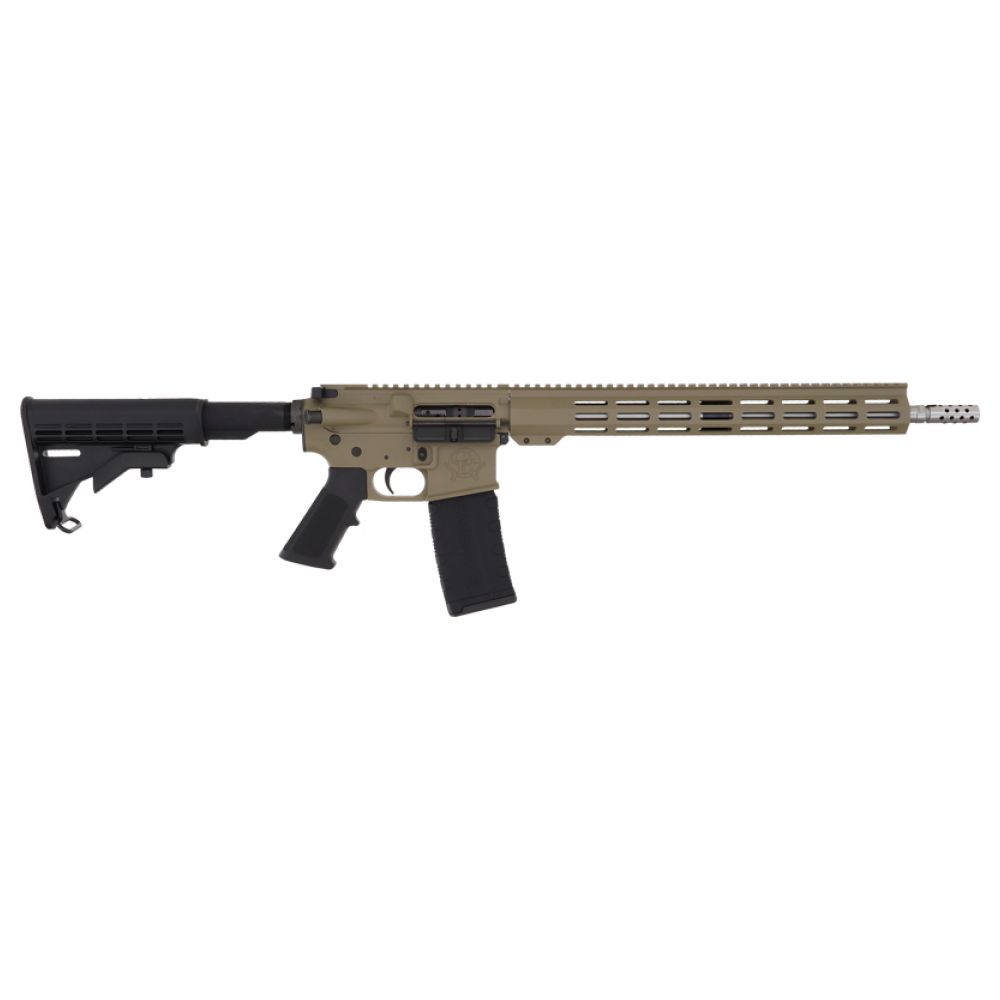
The tactical market in 2026 is defined by gas-tunable piston systems and ambidextrous controls that don’t require a second mortgage. The US Palm Storm CAT 4 Rifle is the standout here. It’s a 16-inch, mid-length gas system in 5.56 NATO with a monolithic aluminum handguard and a proprietary bolt carrier group that reduces fouling by 40% compared to a standard DI setup. I ran 500 rounds of M193 through it suppressed, and the bolt was still wet with factory grease—zero malfunctions.
For those needing more punch, the Big Horn Armory AR500 NEXT GEN in .500 Auto Max delivers 950 ft-lbs at the muzzle from a 12.5-inch barrel. It’s a gas-operated semi-auto that cycles 300-grain hard-cast loads reliably. The recoil is stout, but the Magpul MOE stock and Hogue grip keep it manageable. This is a brush gun for hogs or a truck gun for two-legged threats—it’s not subtle, but it works.
Long-Range Builds: Precision Repeaters and Action Upgrades
Long-range shooting in 2026 is about barrel harmonics and trigger consistency. The Tikka T3/T3x Short Action remains the gold standard for a reason: the two-lug bolt has a 70-degree throw, and the single-stage trigger breaks at a crisp 2.5 pounds from the factory. I’ve bedded a dozen of these into KRG Bravo chassis for customers—they consistently shoot 0.4 MOA with 140-grain ELD-Ms in 6.5 Creedmoor. The bolt lift is smoother than a Remington 700 after a $400 gunsmith job, and it comes stock with a threaded muzzle for a brake.
For rimfire precision, the Henry H1 Rimfire Lever-Action Rifle is a dark horse. It’s a 16-inch .22 LR with a 10-round tube magazine and adjustable rear sight. I’ve shot 50-yard groups under an inch with CCI Standard Velocity—not match grade, but for a lever gun, that’s exceptional. It’s a training tool for new shooters or a pest control rifle that won’t blow out your eardrums.
Choosing the Right Platform: Action, Caliber, and Budget
I get asked daily: “What’s the best 2026 rifle for under $1,500?” For that budget, you’re looking at the Ruger American Gen II for hunting ($599 MSRP) or the US Palm Storm CAT 4 for tactical ($1,299 street price). If you’ve got $2,500, a Tikka T3x in a chassis with a Vortex PST Gen II is the long-range sweet spot. Don’t waste money on a rifle that’s too heavy for your intended use—a 12-pound precision rig won’t make a 10-mile hike fun.
Caliber selection is critical. 6.5 Creedmoor is still king for long-range due to barrel life (3,000-4,000 rounds) and recoil management. .308 remains relevant for hunting due to ammo availability. .223/5.56 is the tactical standard, but if you’re running suppressed, consider a piston gun to cut down on gas blowback. Visit our rifles collection to compare specs side-by-side.
Accessories That Make or Break a Build
Your rifle is only as good as its weakest link. For 2026, I’m recommending direct-thread suppressors over QD mounts—they’re lighter and less prone to point-of-impact shift. For optics, a 3-15x FFP scope with a 34mm tube is the sweet spot for hunting and tactical; anything bigger is overkill for 90% of shooters. Bipods should be Harris S-BRM clones with a 6-9 inch range—don’t buy the $30 Amazon specials; they wobble.
Triggers matter more than barrels. A $200 trigger job on a factory rifle will shrink groups more than a $500 barrel swap. For the Tikka T3x, the factory trigger is good; for the Ruger American, upgrade the trigger spring to a 2.5-pound kit. For the US Palm, the stock trigger breaks at 4.5 pounds with minimal creep—leave it alone unless you’re competition shooting.
What is the best all-around new rifle for 2026 under $2,000?
The Tikka T3x in 6.5 Creedmoor. It’s accurate out of the box, has a smooth action, and aftermarket support is extensive. You’ll get sub-MOA groups with factory Hornady ELD-M ammo, and the barrel life is excellent. Pair it with a $400 Vortex scope and you’re in business for hunting or long-range target work.
Should I buy a piston or direct impingement AR in 2026?
For suppressed use, go piston. The US Palm Storm CAT 4 runs cleaner and reduces gas to the face. For unsuppressed plinking or competition, DI is lighter and cheaper. Piston guns cost $200-400 more, but if you’re shooting 500+ suppressed rounds per year, the reduced cleaning time is worth it.
Are lever-action rifles viable for hunting in 2026?
Yes, inside 150 yards. The Chiappa 92 in .357 Mag or .44 Mag is a 100-yard deer gun with proper shot placement. The Henry H1 is a .22 LR trainer, not a primary hunting rifle. Lever actions are faster to cycle than bolts for follow-up shots in thick cover, but you lose the ballistic advantage of a 6.5 Creedmoor or .308 at range.
Browse our firearms collection
Last updated: April 24, 2026