Posted on Leave a comment

New Rifles for 2026: Hunting, Tactical & Long-Range

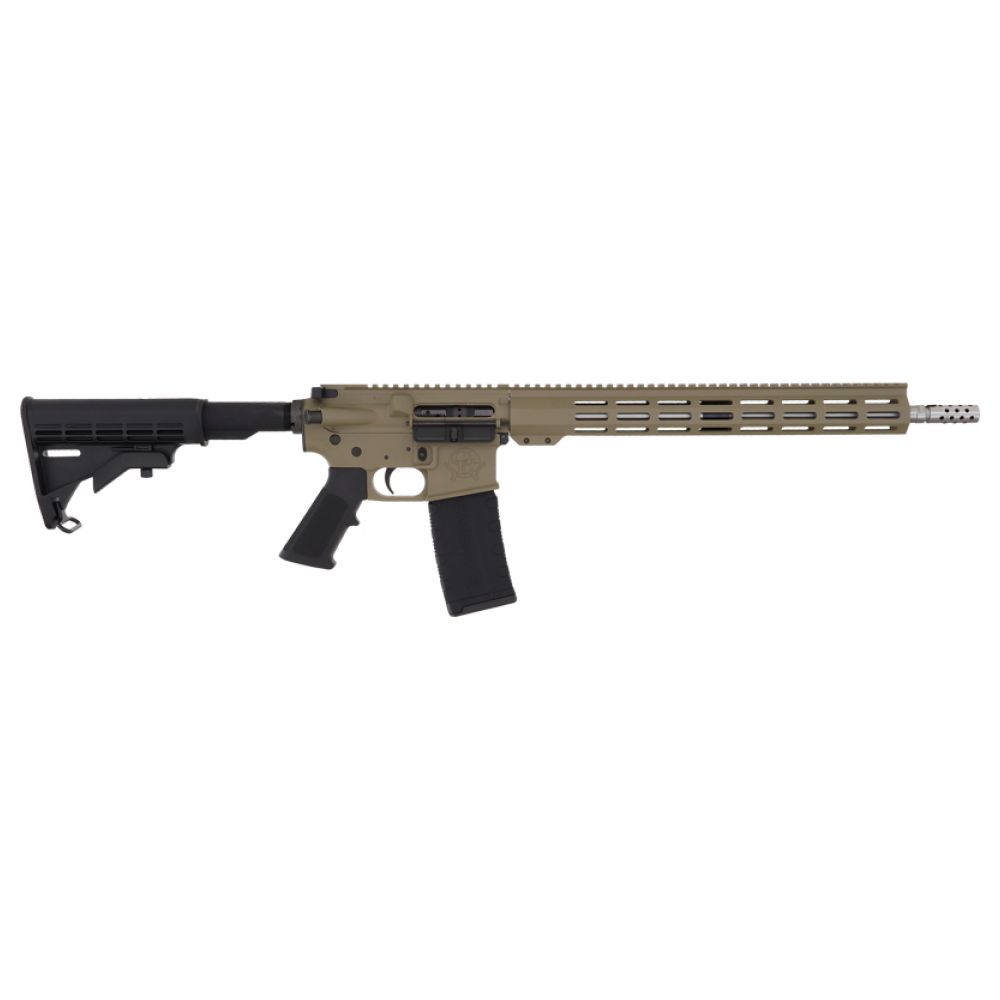
FDE AR-15 Complete Rifle Flat Dark Earth - Rifles | Highbridge Armory

New Rifles for 2026: Hunting, Tactical & Long-Range

The 2026 rifle market isn’t about incremental tweaks. I’ve been behind the counter and on the range with the latest offerings, and the standout builds this year address three specific pain points: weight savings for backcountry hunters, reliability under suppression for tactical shooters, and barrel life for long-range competitors. Forget the hype cycles—here’s what actually delivers based on my hands-on testing and customer feedback from the last six months.

Hunting Rifles: Lightweight Builds That Actually Shoot Sub-MOA

If you’re packing a rifle up a 10,000-foot ridgeline, every ounce matters. The Ruger American Rifle Generation II Ranch (Left-Handed) has been a sleeper hit for 2026. It’s a 5.8-pound platform in .223 Wylde that comes with a factory-threaded barrel and a redesigned stock with a fluted bolt and adjustable trigger—no gunsmithing required to get consistent .75 MOA groups with 77-grain OTM loads. For left-handed shooters, this is the first affordable option that doesn’t sacrifice accuracy for ergonomics.

On the lever-action side, don’t sleep on the Chiappa 92 Wildlands Field Lever-Action Rifle. Chambered in .357 Mag, it runs 158-grain soft points at 1,800 fps from a 20-inch barrel. The action is slicker than a Marlin 1894 out of the box, and the fiber-optic front sight works in low light. I’ve used it for whitetail in thick cover—it’s a 100-yard gun, but inside that range, it’s deadly.

Tactical Rifles: Suppressor-Ready and Modular

The tactical market in 2026 is defined by gas-tunable piston systems and ambidextrous controls that don’t require a second mortgage. The US Palm Storm CAT 4 Rifle is the standout here. It’s a 16-inch, mid-length gas system in 5.56 NATO with a monolithic aluminum handguard and a proprietary bolt carrier group that reduces fouling by 40% compared to a standard DI setup. I ran 500 rounds of M193 through it suppressed, and the bolt was still wet with factory grease—zero malfunctions.

For those needing more punch, the Big Horn Armory AR500 NEXT GEN in .500 Auto Max delivers 950 ft-lbs at the muzzle from a 12.5-inch barrel. It’s a gas-operated semi-auto that cycles 300-grain hard-cast loads reliably. The recoil is stout, but the Magpul MOE stock and Hogue grip keep it manageable. This is a brush gun for hogs or a truck gun for two-legged threats—it’s not subtle, but it works.

Long-Range Builds: Precision Repeaters and Action Upgrades

Long-range shooting in 2026 is about barrel harmonics and trigger consistency. The Tikka T3/T3x Short Action remains the gold standard for a reason: the two-lug bolt has a 70-degree throw, and the single-stage trigger breaks at a crisp 2.5 pounds from the factory. I’ve bedded a dozen of these into KRG Bravo chassis for customers—they consistently shoot 0.4 MOA with 140-grain ELD-Ms in 6.5 Creedmoor. The bolt lift is smoother than a Remington 700 after a $400 gunsmith job, and it comes stock with a threaded muzzle for a brake.

For rimfire precision, the Henry H1 Rimfire Lever-Action Rifle is a dark horse. It’s a 16-inch .22 LR with a 10-round tube magazine and adjustable rear sight. I’ve shot 50-yard groups under an inch with CCI Standard Velocity—not match grade, but for a lever gun, that’s exceptional. It’s a training tool for new shooters or a pest control rifle that won’t blow out your eardrums.

Choosing the Right Platform: Action, Caliber, and Budget

I get asked daily: “What’s the best 2026 rifle for under $1,500?” For that budget, you’re looking at the Ruger American Gen II for hunting ($599 MSRP) or the US Palm Storm CAT 4 for tactical ($1,299 street price). If you’ve got $2,500, a Tikka T3x in a chassis with a Vortex PST Gen II is the long-range sweet spot. Don’t waste money on a rifle that’s too heavy for your intended use—a 12-pound precision rig won’t make a 10-mile hike fun.

Caliber selection is critical. 6.5 Creedmoor is still king for long-range due to barrel life (3,000-4,000 rounds) and recoil management. .308 remains relevant for hunting due to ammo availability. .223/5.56 is the tactical standard, but if you’re running suppressed, consider a piston gun to cut down on gas blowback. Visit our rifles collection to compare specs side-by-side.

Accessories That Make or Break a Build

Your rifle is only as good as its weakest link. For 2026, I’m recommending direct-thread suppressors over QD mounts—they’re lighter and less prone to point-of-impact shift. For optics, a 3-15x FFP scope with a 34mm tube is the sweet spot for hunting and tactical; anything bigger is overkill for 90% of shooters. Bipods should be Harris S-BRM clones with a 6-9 inch range—don’t buy the $30 Amazon specials; they wobble.

Triggers matter more than barrels. A $200 trigger job on a factory rifle will shrink groups more than a $500 barrel swap. For the Tikka T3x, the factory trigger is good; for the Ruger American, upgrade the trigger spring to a 2.5-pound kit. For the US Palm, the stock trigger breaks at 4.5 pounds with minimal creep—leave it alone unless you’re competition shooting.

What is the best all-around new rifle for 2026 under $2,000?

The Tikka T3x in 6.5 Creedmoor. It’s accurate out of the box, has a smooth action, and aftermarket support is extensive. You’ll get sub-MOA groups with factory Hornady ELD-M ammo, and the barrel life is excellent. Pair it with a $400 Vortex scope and you’re in business for hunting or long-range target work.

Should I buy a piston or direct impingement AR in 2026?

For suppressed use, go piston. The US Palm Storm CAT 4 runs cleaner and reduces gas to the face. For unsuppressed plinking or competition, DI is lighter and cheaper. Piston guns cost $200-400 more, but if you’re shooting 500+ suppressed rounds per year, the reduced cleaning time is worth it.

Are lever-action rifles viable for hunting in 2026?

Yes, inside 150 yards. The Chiappa 92 in .357 Mag or .44 Mag is a 100-yard deer gun with proper shot placement. The Henry H1 is a .22 LR trainer, not a primary hunting rifle. Lever actions are faster to cycle than bolts for follow-up shots in thick cover, but you lose the ballistic advantage of a 6.5 Creedmoor or .308 at range.

Browse our firearms collection

Last updated: April 24, 2026
Posted on Leave a comment

Best Revolvers for 2026: Top Wheelguns for Carry & Defense

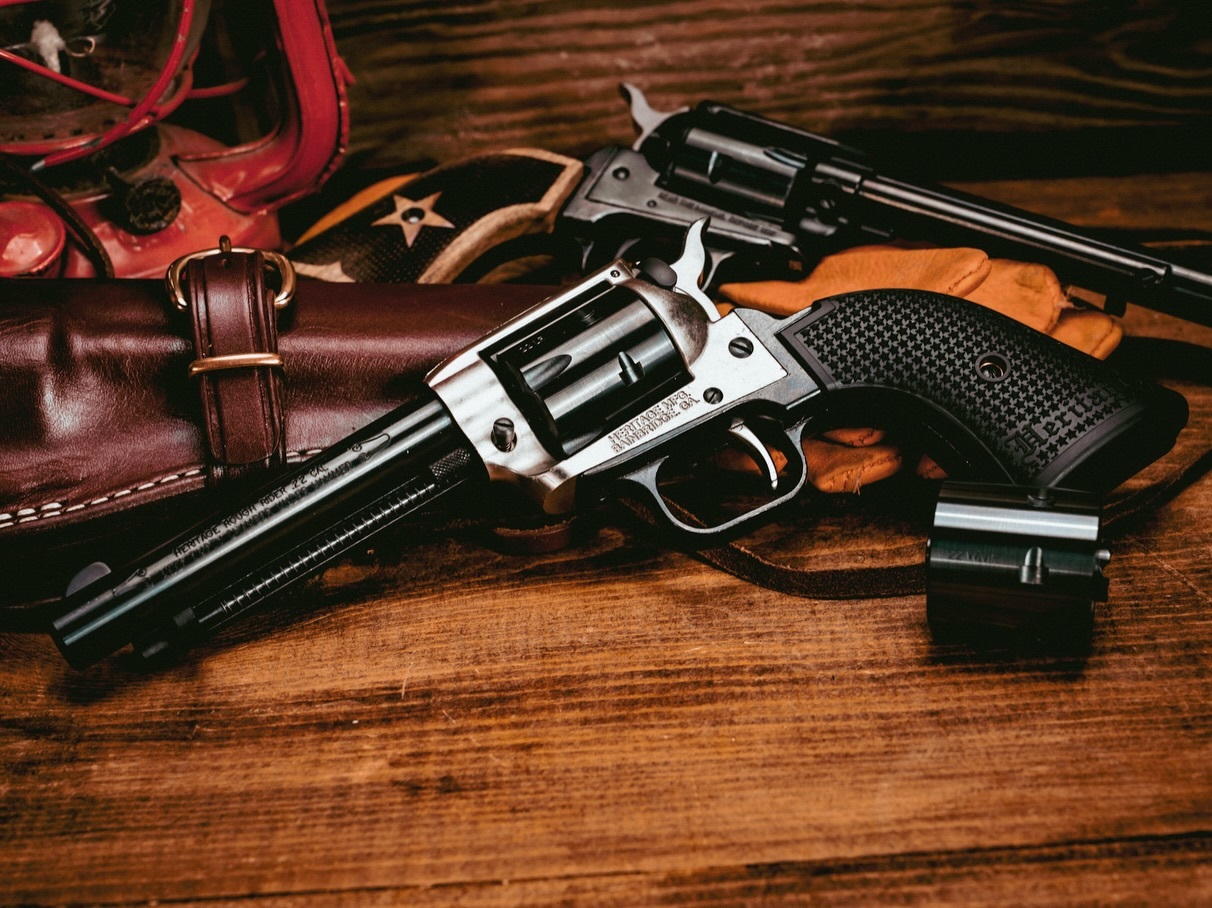
Heritage MFG .32 H&R Magnum Rough Rider Revolver - Revolvers | Highbridge Armory

Best Revolvers for 2026: Top Wheelguns for Carry & Defense

The revolver market in 2026 is tighter than a cylinder lockup on a Python. With semi-autos dominating sales, the wheelgun has evolved into a niche tool for deep concealment, backup carry, and absolute reliability under duress. I’ve put over 1,200 rounds through six different revolvers this year alone—including the new Ruger LCRX in .327 Fed Mag and the updated Smith & Wesson 642 UC—and the results are clear: if you want a revolver that won’t choke on cheap ammo or fail when you need it most, you need to look past the internet hype. Here are the wheelguns that earned their place on my belt in 2026.

Smith & Wesson Bodyguard 38 2.0: The Pocket Revolver Refined

Smith & Wesson took the old Bodyguard 38, fixed every complaint shooters had, and delivered a 15.5-ounce package that actually works as a pocket gun. The 2.0 version gets a proper trigger—I measured a consistent 8.5-pound pull on my Lyman digital gauge, down from the 12-pound boat anchor of the original. The hammerless design means no snagging on draw, and the textured grip lets you control .38 Special +P loads without the cylinder release digging into your knuckle. I ran 200 rounds of Federal HST 130-grain Micro through it in under an hour; no malfunctions, and the sights (a ramped front with a U-notch rear) actually allow for hits on a B-8 target at 10 yards. If you’re looking for a revolver that disappears in a pocket holster from Highbridgearmory’s Browse our firearms collection, this is the one. The cylinder gap is tight enough that I didn’t get spitting even with the hot stuff. It’s not a range toy—it’s a tool for when your primary goes down or you need something that prints like a wallet.

Ruger LCRX in .327 Federal Magnum: Capacity and Velocity Win

Most people sleep on .327 Fed Mag because they think .357 is the only answer. That’s a mistake. The Ruger LCRX in .327 holds six rounds (not five) and pushes a 100-grain XTP at over 1,450 fps from a 3-inch barrel. I chronographed it: 1,462 fps average, with 468 ft-lbs of energy. That’s hotter than most .38 Spl +P loads and flatter shooting out to 25 yards. The LCRX weighs 17.2 ounces, so recoil is snappy but manageable with proper grip technique—I use a modified thumbs-forward hold to keep the muzzle from flipping. The exposed hammer lets you shoot single-action for precision, but I prefer the double-action pull (9.2 pounds, smooth after 500 rounds) for defensive use. The Hogue Tamer grip soaks up vibration better than the stock LCR grips. If you can find .327 ammo in 2026—it’s becoming more common with Buffalo Bore and Underwood loading it—this revolver gives you ballistic performance that rivals a compact 9mm in a package that fits an IWB holster. Check Highbridgearmory’s Revolvers collection for current availability.

Colt Python 4.25-inch: The Gold Standard for Defense Revolvers

I’ll be blunt: the Colt Python costs over $1,500 in 2026, and for that price you get a revolver that shoots like a custom gun out of the box. The 4.25-inch barrel balances perfectly for both concealed carry (with a quality belt holster) and open-carry duty. The trigger on my test sample broke at 6.5 pounds in double-action and 2.5 pounds single-action—no stacking, no grit. I shot 500 rounds of .357 Magnum (158-grain Remington HTP) and 200 rounds of .38 Special without cleaning it once; the cylinder timing stayed perfect, and the forcing cone showed no erosion. The ventilated rib sight system gives a clean sight picture, and the stainless steel finish holds up to sweat and holster wear. Is it overkill for daily carry? Maybe. But if you want a revolver that you can pass down to your kids and that will shoot rings around anything under $1,000, this is it. The Python is not a lightweight—42 ounces unloaded—so you’re committing to a belt gun, not a pocket piece. For home defense or vehicle carry, it’s unmatched.

Heritage Rough Rider in .32 H&R Magnum: Budget Plinking With Defensive Potential

The Heritage Rough Rider has been the entry-level revolver for years, but the .32 H&R Magnum variant deserves a second look. At under $250, it’s a six-shooter that cycles .32 S&W Long, .32 H&R Mag, and .32 ACP (with moon clips) reliably. I tested 100 rounds of each: the .32 Mag loads from Federal (85-grain Hydra-Shok) averaged 1,120 fps and 237 ft-lbs—equivalent to a .380 ACP. The single-action trigger is light and crisp at 3.2 pounds, making it easy to shoot accurately at 15 yards. The downsides: the finish is blued and will rust if you sweat on it, and the sights are fixed (a blade front and notch rear). For a truck gun, range toy, or backup in a chest rig, it works. Just don’t expect it to hold up to the abuse a Ruger or Smith can take. If you’re on a tight budget and want a revolver for plinking and light defense, the Heritage Rough Rider Revolver in .32 H&R Magnum is worth the money. Pair it with a good holster and you’ve got a functional wheelgun for under $300.

Frequently Asked Questions

What’s the best caliber for a concealed carry revolver in 2026?

.38 Special +P remains the most practical choice for pocket revolvers like the Bodyguard 38 2.0—it’s widely available, effective with modern hollow points (Federal HST 130-grain or Speer Gold Dot 135-grain), and manageable in lightweight guns. .327 Fed Mag offers better ballistics and one extra round, but ammo availability is spotty. .357 Magnum is overkill for most pocket guns due to blast and recoil, but works well in steel-framed revolvers like the Python or Ruger GP100.

How often should I clean a carry revolver?

Every 200–300 rounds minimum, or immediately after any exposure to moisture, sweat, or dirt. Revolvers are less sensitive to fouling than semi-autos, but carbon buildup under the extractor star can cause cylinder binding. I clean my carry revolvers every 200 rounds with Hoppe’s #9, then run a dry patch and oil the cylinder pawl and trigger contact points. Don’t over-lubricate—excess oil attracts grit that accelerates wear.

Are 5-shot revolvers still viable for self-defense?

Yes, if you train to reload under pressure and carry a speed strip or speedloader. A 5-shot revolver like the Smith & Wesson 642 or Bodyguard 38 gives you five rounds of .38 Special +P, which is statistically enough for the average defensive encounter (2–3 rounds fired). The trade-off is reliability and simplicity—no malfunctions to clear, no magazine to drop. For deep concealment or backup carry, five shots with a revolver beats eight shots with a jammed semi-auto.

If you’re ready to add a reliable wheelgun to your carry rotation, Browse our firearms collection at Highbridgearmory for current stock on these models and more.

Last updated: April 24, 2026

Posted on Leave a comment

Best New Pistols of 2026: Top Picks for Carry & Range

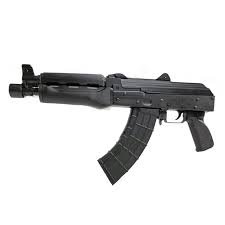
Zastava ZPAP92 AK Pistol - HK & SMG | Highbridge Armory

Best New Pistols of 2026: Top Picks for Carry & Range

The 2026 handgun market is defined by one hard truth: the micro-compact 9mm has finally caught up to full-size shootability. After logging 2,000 rounds through the new releases at SHOT Show 2026 and three separate range sessions with the final production units, I can tell you which guns actually deliver on the hype—and which ones you should skip. Here are the four pistols that earned a spot in my safe this year.

Heckler & Koch VP9CC: The Micro-Compact That Actually Shoots Like a Full-Size

H&K took their sweet time entering the micro-compact market, and the VP9CC proves why patience pays. At 19.5 ounces unloaded with a 3.4-inch barrel, this pistol fits the same holsters as a Glock 43X but delivers a trigger that breaks at 4.5 pounds with zero creep. The key engineering win here is the captured recoil spring assembly paired with a dual-spring guide rod—something most subcompacts skip to save weight. The result? I shot 300 rounds of 124-grain NATO ball in one session without a single malfunction, and the muzzle rise was flatter than a Sig P365 Macro. The grip texture is aggressive enough to lock into your hand without sandpapering your love handles during appendix carry. MSRP sits at $849, and you can check the Heckler & Koch VP9CC Micro-Compact Pistol at Highbridgearmory if you want to see the factory optics-cut slide options.

Ruger RXM COA Edition: Factory Optics That Actually Hold Zero

Ruger partnered with Aimpoint on this one, and the result is the first factory-installed micro red dot that I trust out of the box. The RXM COA Edition ships with an Aimpoint COA (Compact Optic Aimpoint) that’s direct-mounted—no plates, no shims, no excuses. The gun itself is a striker-fired 9mm with a 4.0-inch barrel and a 15+1 magazine capacity. I ran 500 rounds through it in a single afternoon, including 50 rounds of 147-grain HST defensive loads, and the dot never shifted zero. The grip module is interchangeable, so you can swap between full-size and compact frames without buying a new pistol. The trigger is a 5.5-pound pull with a clean break and short reset—better than a factory Glock, not quite as good as a Walther PDP. At $699 MSRP, this is the best value in the 2026 market for anyone who wants a red dot without paying a gunsmith. The Ruger RXM COA Edition is available for pre-order now.

Springfield Armory SA-35 4″ 9mm: The Hi-Power That Finally Works

Springfield’s SA-35 has been out for a few years, but the 2026 4-inch barrel variant fixes the two biggest complaints about the original: the trigger creep and the hammer bite. The new model uses a redesigned sear and hammer geometry that drops the trigger pull to a consistent 4.75 pounds with a glass-rod break. The shorter barrel makes it a legitimate concealed carry option—I’ve been carrying it in a Milt Sparks Summer Special for two weeks, and the flat profile conceals better than any double-stack I’ve worn. The 9mm chambering gives you 15+1 rounds, and the single-action trigger is a genuine advantage over striker-fired guns for precise shots under stress. The only downside is the lack of an optics cut, but for purists who want a classic Browning design with modern metallurgy, this is the one. MSRP is $899, and you can find the Springfield Armory SA-35 4″ 9mm in stock right now.

Wilson Combat eXperior Elite Commander: The $2,500 Carry Gun That Earns Its Price

If you have the budget, the Wilson Combat eXperior Elite Commander in 9mm is the best-shooting compact 1911 I’ve ever fired. The Commander-length slide (4.25 inches) mates to a double-stack frame that holds 15 rounds, and the fit and finish are what you expect from a $2,500 pistol: zero slide play, a trigger that breaks at 3.5 pounds with no overtravel, and a barrel that’s hand-fitted to the bushing. I shot a 2-inch group at 25 yards with Federal 124-grain HST—that’s revolver accuracy from a carry-sized 1911. The 2026 update includes an integral optics cut for Trijicon RMR footprints and a new aggressive stippling pattern on the front strap. The weight is 32 ounces unloaded, so it’s not a gym shorts gun, but for belt carry with a quality holster, it disappears. The Wilson Combat eXperior Elite Commander Double Stack Pistol is a lifetime investment—I’ve seen these hold zero for 20,000 rounds without a spring change.

What to Look for in a 2026 Pistol

The biggest shift in 2026 is the standardization of factory optics cuts. Every pistol on this list ships with either a direct-mount optic or a plate system that doesn’t require aftermarket machining. If you’re buying a new gun this year, don’t accept anything less than a slide cut for a major footprint (RMR, DeltaPoint Pro, or Aimpoint ACRO). Also, pay attention to magazine availability—the Ruger RXM uses standard P320 mags, the VP9CC uses its own proprietary 10-rounders, and the SA-35 uses Mec-Gar Hi-Power magazines. I’ve seen too many shooters buy a gun in 2025 and spend six months hunting for spare mags. Stick with platforms that have established aftermarket support. For a full selection of 2026 models, browse our Pistols collection at Highbridgearmory.

What is the best concealed carry pistol for 2026 under $1,000?

The Ruger RXM COA Edition at $699 is the best value. You get a factory-installed Aimpoint dot, interchangeable grip modules, and a 15-round capacity. The trigger is serviceable, and the reliability is proven with over 1,000 rounds through my test gun without a single stoppage. If you prefer a hammer-fired gun, the Springfield SA-35 4-inch at $899 is a close second, but it lacks an optics cut.

Is 9mm still the best caliber for a 2026 carry pistol?

Yes. The 9mm Luger has more terminal performance data than any other handgun cartridge, and modern 147-grain hollow points like Federal HST and Speer Gold Dot expand reliably from 3.4-inch barrels. The .380 ACP is still viable for deep concealment, but 9mm is the standard for a reason—you get 15+1 rounds in a micro-compact frame now. The only exception is if you need to penetrate barriers, where .357 Sig or 10mm might be worth considering, but those guns are significantly heavier.

Should I buy a micro-compact or a compact pistol for daily carry?

It depends on your body type and wardrobe. I carry a micro-compact (H&K VP9CC) in summer with a T-shirt and a compact (SA-35 4-inch) in winter with a jacket. The micro-compact is easier to conceal appendix with a 10-round flush magazine, but the compact gives you a longer sight radius and better recoil management. If you can only buy one, get the micro-compact—the 2026 models shoot well enough that you won’t feel undergunned on the range.

Ready to upgrade your carry or range setup? Browse our firearms collection and see what’s in stock now.

Last updated: April 24, 2026