Posted on Leave a comment

Complete Guide to Desert Eagle: 2026 Models & Comparison

Complete Guide to Desert Eagle: 2026 Models & Comparison

Desert Eagle covers some of the most-searched firearms and accessories on the market. This guide walks through what to look for, the top models available this year, and how to buy safely online.

What to Look For

Shoppers searching for desert eagle 44 magnum typically prioritize reliability, compatibility, and authentic manufacturer sourcing.

Top Models This Year

How to Choose

Pick based on intended use, caliber preference, and compatibility with your existing kit.

Compatibility & Accessories

Most models in the Desert Eagle category accept a range of aftermarket parts.

Buying Safely Online

Always use a licensed FFL dealer for transfers. We ship to dealers nationwide and handle all paperwork.

Posted on Leave a comment

Complete Guide to Ammo: 2026 Models & Comparison

Complete Guide to Ammo: 2026 Models & Comparison

Ammo covers some of the most-searched firearms and accessories on the market. This guide walks through what to look for, the top models available this year, and how to buy safely online.

What to Look For

Shoppers searching for 6.5 prc ammo typically prioritize reliability, compatibility, and authentic manufacturer sourcing.

Top Models This Year

How to Choose

Pick based on intended use, caliber preference, and compatibility with your existing kit.

Compatibility & Accessories

Most models in the Ammo category accept a range of aftermarket parts.

Buying Safely Online

Always use a licensed FFL dealer for transfers. We ship to dealers nationwide and handle all paperwork.

Posted on Leave a comment

Complete Guide to Triggers & Accessories: 2026 Models & Comparison

Complete Guide to Triggers & Accessories: 2026 Models & Comparison

Triggers & Accessories covers some of the most-searched firearms and accessories on the market. This guide walks through what to look for, the top models available this year, and how to buy safely online.

What to Look For

Shoppers searching for pdw sbr typically prioritize reliability, compatibility, and authentic manufacturer sourcing.

Top Models This Year

How to Choose

Pick based on intended use, caliber preference, and compatibility with your existing kit.

Compatibility & Accessories

Most models in the Triggers & Accessories category accept a range of aftermarket parts.

Buying Safely Online

Always use a licensed FFL dealer for transfers. We ship to dealers nationwide and handle all paperwork.

Posted on Leave a comment

Complete Guide to HK & SMG: 2026 Models & Comparison

Complete Guide to HK & SMG: 2026 Models & Comparison

HK & SMG covers some of the most-searched firearms and accessories on the market. This guide walks through what to look for, the top models available this year, and how to buy safely online.

What to Look For

Shoppers searching for mini draco typically prioritize reliability, compatibility, and authentic manufacturer sourcing.

Top Models This Year

How to Choose

Pick based on intended use, caliber preference, and compatibility with your existing kit.

Compatibility & Accessories

Most models in the HK & SMG category accept a range of aftermarket parts.

Buying Safely Online

Always use a licensed FFL dealer for transfers. We ship to dealers nationwide and handle all paperwork.

Posted on Leave a comment

Complete Guide to Street Sweeper & Shotguns: 2026 Models & Comparison

Complete Guide to Street Sweeper & Shotguns: 2026 Models & Comparison

Street Sweeper & Shotguns covers some of the most-searched firearms and accessories on the market. This guide walks through what to look for, the top models available this year, and how to buy safely online.

What to Look For

Shoppers searching for bp12 shotgun typically prioritize reliability, compatibility, and authentic manufacturer sourcing.

Top Models This Year

How to Choose

Pick based on intended use, caliber preference, and compatibility with your existing kit.

Compatibility & Accessories

Most models in the Street Sweeper & Shotguns category accept a range of aftermarket parts.

Buying Safely Online

Always use a licensed FFL dealer for transfers. We ship to dealers nationwide and handle all paperwork.

Posted on Leave a comment

Complete Guide to Staccato Handguns: 2026 Models & Comparison

Complete Guide to Staccato Handguns: 2026 Models & Comparison

Staccato Handguns covers some of the most-searched firearms and accessories on the market. This guide walks through what to look for, the top models available this year, and how to buy safely online.

What to Look For

Shoppers searching for staccato typically prioritize reliability, compatibility, and authentic manufacturer sourcing.

Top Models This Year

How to Choose

Pick based on intended use, caliber preference, and compatibility with your existing kit.

Compatibility & Accessories

Most models in the Staccato Handguns category accept a range of aftermarket parts.

Buying Safely Online

Always use a licensed FFL dealer for transfers. We ship to dealers nationwide and handle all paperwork.

Posted on Leave a comment

Boston Firearms Safety Course Guide

Boston Firearms Safety Course Guide

Boston Firearms Safety Course Guide

Massachusetts law requires a Firearms Safety Course certificate to apply for a License to Carry (LTC) or Firearms Identification Card (FIC). Without that certificate from a state-certified instructor, your application at the Boston Police Licensing Unit won’t even be processed. This isn’t a suggestion; it’s the mandatory first step.

Understanding Massachusetts’ Basic Firearms Safety Course

The state-mandated curriculum is specific. It’s not a marksmanship class. Over a minimum of four hours, a certified instructor will cover Massachusetts firearms law (M.G.L. c. 140), safe handling, storage, and transportation. You’ll learn the operational mechanics of revolvers, semi-automatic pistols, rifles, and shotguns. The course concludes with a written test—typically 50 true/false or multiple-choice questions. Passing earns you the official certificate, valid for life for licensing purposes. Many Boston-area instructors, like those at Mass Firearms School in Holliston or at local rod and gun clubs, integrate live-fire sessions, but the state only requires the classroom component for the basic certificate.

Why Live-Fire Training is Non-Negotiable

Passing the written test proves you know the rules. Live-fire training teaches you how to apply them under real conditions. Handling an unloaded firearm in a classroom is one thing; managing recoil, muzzle discipline, and trigger control with live ammunition is another. This is where fundamental skills like the Isosceles stance, proper grip, and sight alignment become muscle memory. A quality course will have you shooting .22LR or 9mm pistols and .223 rifles under direct supervision. This experience is critical before you make a purchase. At Highbridgearmory, we see informed buyers who’ve had this training—they ask better questions about models like the ZEV OZ-9C Hyper-Comp or a basic Glock 19 because they understand the platform’s function and safety features.

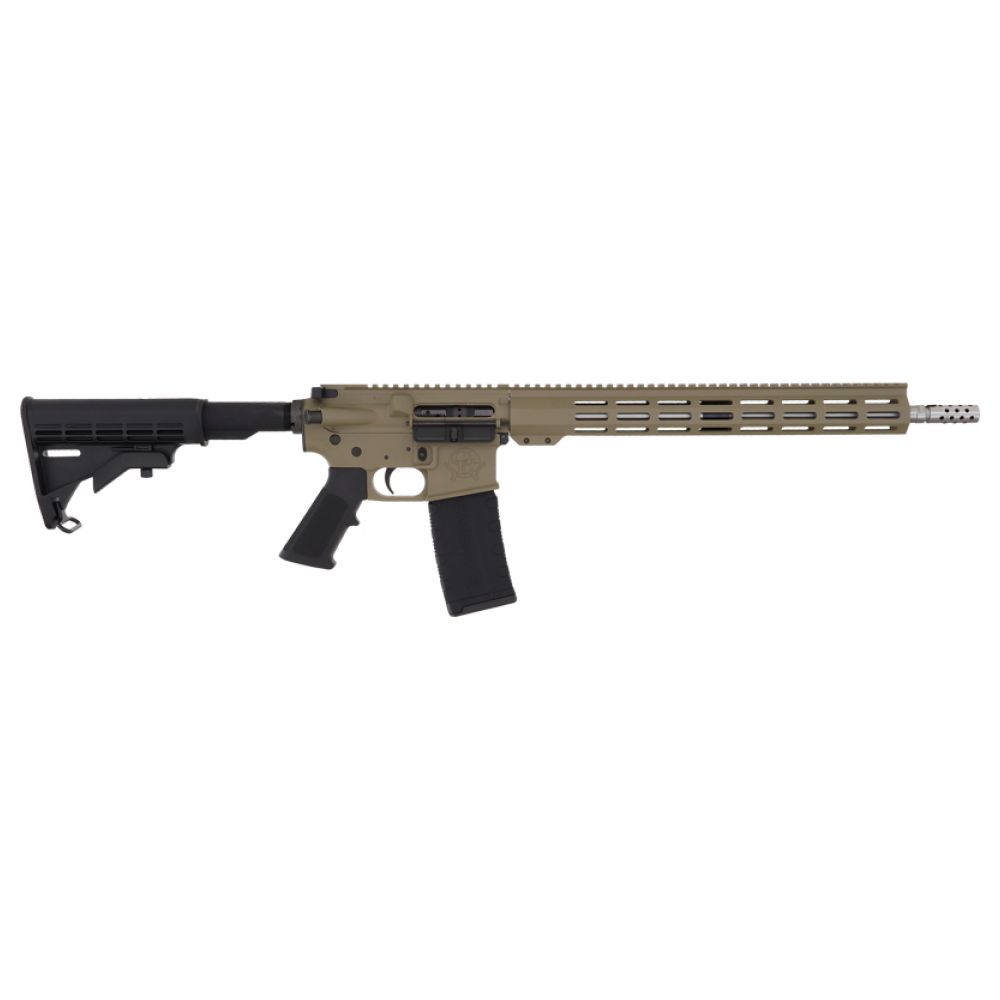
FDE AR-15 Complete Rifle Flat Dark Earth

Beyond the Basics: Advanced Courses in the Boston Area

Once you have your LTC, your education should not stop. Advanced courses address the gaps left by the basic class. Look for Defensive Pistol 1, which covers drawing from a holster, shooting while moving, and low-light fundamentals. Force-on-force scenarios using simunitions provide invaluable stress inoculation. For rifle owners, a carbine course teaching malfunction drills, transitions, and shooting from barricades is essential. Facilities like the Sig Sauer Academy in Epping, NH, or The Range in Medway offer these tiers of instruction. This training directly informs your gear choices. After a carbine course, you’ll appreciate why a reliable optic and a quality two-point sling on an AR-15 platform are necessities, not accessories. It also clarifies your ammunition needs, pushing you towards proven defensive loads rather than just the cheapest range fodder.

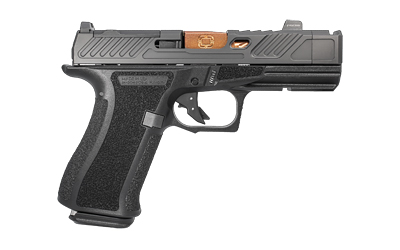
ZEV Technologies OZ-9C Hyper-Comp Semi-Automatic 9mm Pistol

Selecting the Right Instructor and Facility

Not all courses are created equal. Your instructor’s background is paramount. Seek out active or former law enforcement, military, or competitive shooters with verifiable credentials. Visit the facility beforehand. A clean, well-organized range with clear safety protocols speaks volumes. Ask about class size—smaller ratios mean more individual attention. Read reviews specifically about the instructor’s teaching ability and adherence to safety. Remember, you’re not just buying a certificate; you’re building a foundation. The right instructor will explain *why* a rule exists, like the legal intricacies of transporting a firearm in Massachusetts, which is as important as knowing how to clear a jam on your rifle. This foundational knowledge impacts every purchase decision you’ll make, from the firearm itself to the appropriate ammunition for its intended use.

Winchester Deer Season XP Ammunition 300 AAC Blackout

FAQs on Boston Firearms Safety Courses

Where can I take a firearm safety course?

You must take it from a Massachusetts State Police-certified instructor. These are offered at dedicated schools like Mass Firearms School in Holliston, The Range in Medway, and at many local rod and gun clubs such as the Andover Sportsmen’s Club or Woburn Sportsmen’s Association. Always verify the instructor’s certification is current with the MA State Police Firearms Records Bureau.

How much is a firearms safety course?

Prices vary by instructor and inclusions. A basic 4-hour classroom-only course typically runs between $100 and $150. Courses that include live-fire training, rental equipment, and ammunition usually cost between $200 and $350. Advanced defensive courses are more, often ranging from $400 to $600 for a full-day session.

Browse our firearms collection

Last updated: April 20, 2026

Posted on Leave a comment

Firearms and Ammo: The Core System

In Stock: Hornady Critical Defense 9mm Luger Ammo 115 Grain Hornady FTX Polymer Tip Box of 200 rounds - Triggers | Highbridge Armory

Firearms and Ammo: The Core System

A rifle is just an expensive club without the right ammunition. The relationship between a firearm and its cartridge is a precise mechanical and ballistic partnership; getting it wrong means a failure to feed, fire, or function. Choosing the correct ammo for your specific firearm and intended use isn’t a suggestion—it’s the fundamental requirement for safety, reliability, and performance.

Understanding Cartridge Specifications

Reading a box of ammunition correctly is the first step. “9mm Luger,” “.223 Remington,” and “.300 AAC Blackout” are not just names; they are specific dimensional and pressure standards. Firing a .300 Blackout round in a .223 Remington chamber will result in a catastrophic failure. Similarly, while .308 Winchester and 7.62x51mm NATO are dimensionally similar, their pressure specifications differ. Always consult your firearm’s manual, which is stamped on the barrel. For modern sporting rifles, like the popular FDE AR-15 Complete Rifle, you must know if your barrel is chambered for .223 Wylde, 5.56 NATO, or .223 Remington, as this dictates safe ammunition selection. At Highbridgearmory, we list these specs clearly because we’ve seen the consequences of mismatched components.

The Handgun Caliber Debate: 9mm vs. .45 ACP

The debate between 9mm Luger and .45 ACP is settled for practical purposes. Modern 9mm defensive loads from companies like Federal, Speer, and Hornady offer terminal performance nearly identical to .45 ACP, with higher capacity, less recoil, and lower cost. A ZEV OZ-9C Hyper-Comp pistol, for example, delivers 124-grain +P ammunition with exceptional control and speed due to its compensator, making 9mm an even more effective choice. For duty, defense, or competition, 9mm is the dominant caliber. The .45 ACP retains its place for historical appeal and suppressor use with subsonic rounds, but for putting effective rounds on target quickly, 9mm is the pragmatic answer. Stock up on quality 9mm at Highbridgearmory.

ZEV Technologies OZ-9C Hyper-Comp Semi-Automatic 9mm Pistol

Rifle Ammunition: Matching Round to Role

Selecting rifle ammunition requires defining the task. For long-range precision, you need high-BC match bullets like the 6.5 Creedmoor 140gr ELD-M from Hornady Custom Ammunition. For home defense or hunting in brush, a .300 Blackout firing a 110-grain V-MAX provides devastating close-range energy, especially from a short-barreled rifle. For general-purpose training and varmint control, bulk .223 Remington 55gr FMJ is the economical choice. The critical factor is twist rate. A 1:7″ twist barrel stabilizes heavy 77gr bullets, while a 1:12″ twist is best for lighter 55gr rounds. Using the wrong combination degrades accuracy. We match our rifles collection with appropriate ammunition listings for this exact reason.

FDE AR-15 Complete Rifle Flat Dark Earth

Ammunition Storage, Reliability, and Sourcing

Ammunition is a component with a shelf life. Store it in a cool, dry place in its original packaging or in sealed ammo cans with a desiccant. Factory-loaded ammunition from reputable manufacturers like Winchester, Federal, and Hornady undergoes stringent pressure testing for reliability. Avoid remanufactured or suspect “reloads” for defensive use. When sourcing, consider the primer type. Magnum rifle cartridges often require Large Rifle Magnum Primers for consistent ignition in cold weather. For hunting, use ammunition designed for the game, such as Winchester Deer Season XP in .300 Blackout, which combines controlled expansion with deep penetration. A reliable supply chain is key, which is why we maintain deep inventory across calibers.

Winchester Deer Season XP Ammunition 300 AAC Blackout

Niche Calibers and Future-Proofing Your Kit

While 9mm, 5.56mm, and .308 Win are the staples, niche calibers solve specific problems. The FN 5.7x28mm offers low recoil, high capacity, and armor-piercing potential from a pistol platform. 6.5 Grendel provides long-range ballistics from an AR-15 lower. When adopting a niche caliber, your primary concern is ammunition availability. Before investing in the firearm, secure a steady supply of ammo. Future-proof your kit by focusing on calibers with strong military, law enforcement, or competitive adoption, as these guarantee continued production. Diversify your training with affordable bulk calibers, but standardize your defensive tools around proven, available loads.

Can I shoot 5.56 NATO ammunition in a .223 Remington chamber?

No, you should not. While a 5.56mm round may physically fit, it operates at higher chamber pressure (approx. 62,000 psi vs. 55,000 psi). Firing 5.56 in a .223 chamber can cause excessive pressure, leading to primer cratering, case head separation, or catastrophic failure. Always use ammunition that matches or is below the specification stamped on your barrel. A .223 Wylde chamber is designed to safely fire both.

What’s the difference between Full Metal Jacket (FMJ) and Jacketed Hollow Point (JHP)?

FMJ ammunition has a lead core fully encased in a copper jacket. It’s for training and target shooting, as it offers minimal expansion and can over-penetrate. JHP ammunition has a hollow cavity in the nose designed to expand upon impact, creating a larger wound channel and transferring energy more efficiently to the target while reducing over-penetration risk. JHP is the standard for defensive and duty use.

How much ammunition should I keep on hand?

There’s no single answer, but a practical baseline is 1,000 rounds per primary firearm for training and 200-500 rounds of your chosen defensive load. This allows for regular practice and a reserve. For a common caliber like 9mm or 5.56mm, maintaining 2,000-5,000 rounds is not unreasonable for dedicated shooters. Store it properly, and rotate your stock using older ammo for training first.

Browse our firearms collection

Last updated: April 19, 2026

Posted on Leave a comment

Firearms Act Minimum Sentences Explained

Authentic MCX-SPEAR LT IR 762x39 16" RIFLE - Rifles | Highbridge Armory

Firearms Act Minimum Sentences Explained

Under 18 U.S.C. § 924(c), using or carrying a firearm during a federal crime of violence or drug trafficking crime triggers a mandatory minimum sentence of 5 years. If the firearm is brandished, it’s 7 years. If it’s discharged, it’s 10 years. These sentences must run consecutively to any other sentence imposed, meaning they stack on top of time for the underlying crime. This isn’t theoretical; it’s a concrete reality that has filled federal prisons for decades, and its application hinges on specific, often misunderstood, legal definitions.

The Core Statute: 18 U.S.C. § 924(c)

The law is brutally straightforward in its structure. The base offense is using or carrying a firearm “during and in relation to” or possessing a firearm “in furtherance of” a qualifying crime. The “during and in relation to” language is key—the firearm must have some purpose or effect related to the crime. Mere possession at the scene isn’t always enough. However, “in furtherance of” is a broader standard, often met if the firearm is readily accessible for use. The sentencing escalators for brandishing or discharging are fact-driven. “Brandishing” includes all but the most incidental showing of the firearm. These mandatory minimums are not discretionary; judges cannot sentence below them, regardless of circumstances. This rigidity is the statute’s defining and most controversial feature.

What Qualifies as a “Crime of Violence”?

This definition is a legal minefield. The statute points to two definitions. The “elements clause” covers any felony that has as an element the use, attempted use, or threatened use of physical force. This includes offenses like armed robbery, carjacking, and certain assaults. The “residual clause,” which covered felonies that by their nature involve a substantial risk of physical force, was ruled unconstitutionally vague by the Supreme Court in United States v. Davis (2019). Post-Davis, prosecutors must prove the underlying felony meets the “elements clause” test to apply a 924(c) charge. This has led to countless appeals and reversals for convictions predicated on now-invalid residual clause crimes like federal conspiracy.

ZEV Technologies OZ-9C Hyper-Comp Semi-Automatic 9mm Pistol

Stacking Charges and “Second or Subsequent” Convictions

This is where sentences become draconian. If a defendant is convicted on multiple 924(c) counts from the same indictment or proceeding, each count carries its own mandatory minimum, and they must be served consecutively. This is known as “stacking.” For example, two counts for brandishing firearms during two separate drug transactions in the same case would result in a mandatory 14-year sentence (7 years + 7 years), on top of the drug sentence. Furthermore, a “second or subsequent conviction” under 924(c) triggers a 25-year mandatory minimum. Critically, this “second” conviction can be charged in the same indictment as the first. This provision has been reformed slightly by the First Step Act of 2018, which now limits the 25-year minimum to true recidivists—those with a prior 924(c) conviction that has already become final.

FDE AR-15 Complete Rifle Flat Dark Earth

Legal Defenses and Recent Reforms

Defenses often focus on attacking the predicate “crime of violence” post-Davis, or arguing the firearm wasn’t used “in relation to” the crime. Mere presence of a gun in a car used for a drug deal may be insufficient without proof it was strategically placed for use. The First Step Act’s changes to “stacking” were a significant reform, but the core mandatory minimums remain. Prosecutorial discretion is immense—the decision to charge 924(c) often forces plea deals. For responsible owners, the lesson is stark: lawful possession is paramount. The legal line separating a tool for sport, like the FDE AR-15 from Highbridgearmory, from a sentencing enhancer is defined entirely by the context of its use. Understanding these statutes is a critical part of responsible firearm ownership.

Winchester Deer Season XP Ammunition 300 AAC Blackout

Practical Implications for Firearm Owners

For the lawful gun owner, this law underscores the absolute necessity of compliance and situational awareness. Your firearm must only be used in strict accordance with self-defense laws and never in the commission of any unlawful act. The mandatory minimums apply even to first-time offenders with no prior record. If you use a firearm, even one lawfully purchased from a dealer like Highbridgearmory, during a felony, you are facing a guaranteed 5-year federal prison stint minimum. This is separate from state charges. It also highlights why understanding what constitutes a “crime of violence” is crucial. Transporting your firearm and ammunition, such as 300 Blackout hunting ammo, must be done in a manner that cannot be construed as “in furtherance of” a crime—meaning unloaded, secured, and in compliance with all transportation laws.

Does a mandatory minimum apply if the firearm wasn’t fired?

Yes. The base mandatory minimum of 5 years applies for using or carrying the firearm “during and in relation to” the crime. You do not need to fire it. The act of carrying it with the intent to further the crime is sufficient for the 5-year sentence.

Can these sentences run concurrently with state time?

No. Federal law requires 18 U.S.C. § 924(c) sentences to run consecutively to any other sentence, state or federal. This includes the sentence for the underlying predicate crime. They are always an add-on.

Are there any exceptions to the mandatory minimum?

Extremely few. The “safety valve” provision that allows judges to sentence below mandatory minimums for certain non-violent drug offenders does NOT apply to 924(c) charges. The only major exception is through a Rule 35 motion for substantial assistance, where the defendant provides crucial help to the government in prosecuting another person.

Browse our firearms collection

Last updated: April 19, 2026