Firearms and Ammo: The Core System
A rifle is just an expensive club without the right ammunition. The relationship between a firearm and its cartridge is a precise mechanical and ballistic partnership; getting it wrong means a failure to feed, fire, or function. Choosing the correct ammo for your specific firearm and intended use isn’t a suggestion—it’s the fundamental requirement for safety, reliability, and performance.
Understanding Cartridge Specifications
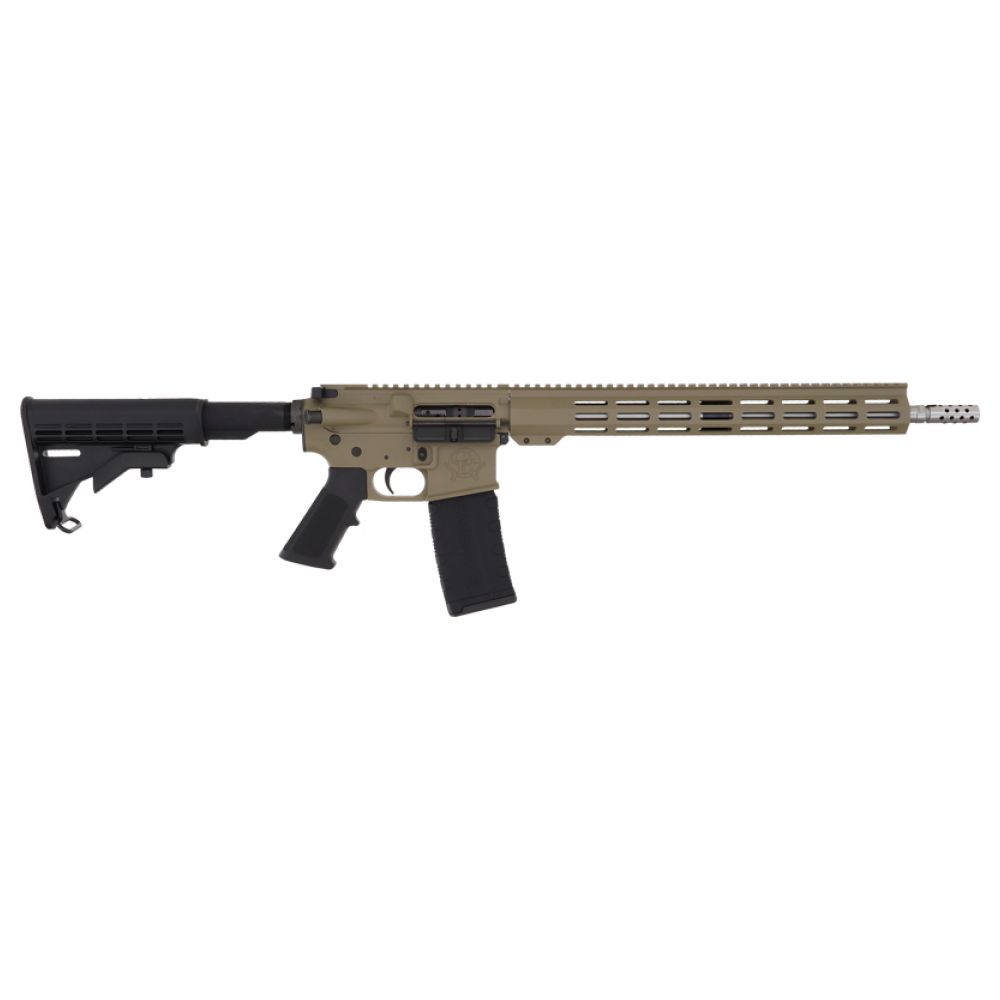
Reading a box of ammunition correctly is the first step. “9mm Luger,” “.223 Remington,” and “.300 AAC Blackout” are not just names; they are specific dimensional and pressure standards. Firing a .300 Blackout round in a .223 Remington chamber will result in a catastrophic failure. Similarly, while .308 Winchester and 7.62x51mm NATO are dimensionally similar, their pressure specifications differ. Always consult your firearm’s manual, which is stamped on the barrel. For modern sporting rifles, like the popular FDE AR-15 Complete Rifle, you must know if your barrel is chambered for .223 Wylde, 5.56 NATO, or .223 Remington, as this dictates safe ammunition selection. At Highbridgearmory, we list these specs clearly because we’ve seen the consequences of mismatched components.
The Handgun Caliber Debate: 9mm vs. .45 ACP
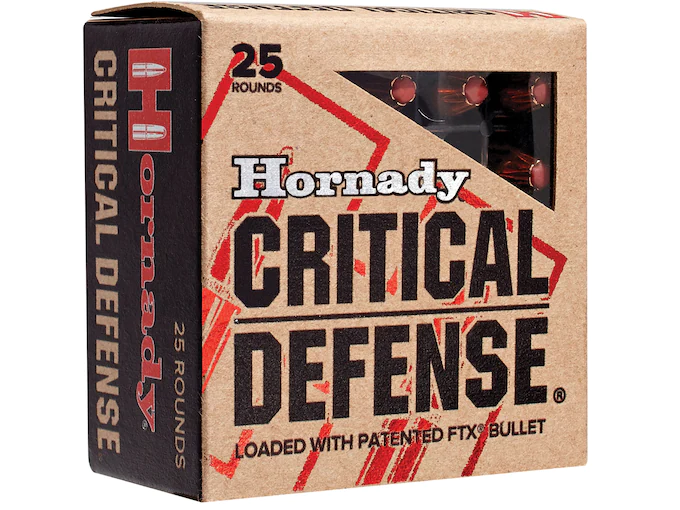
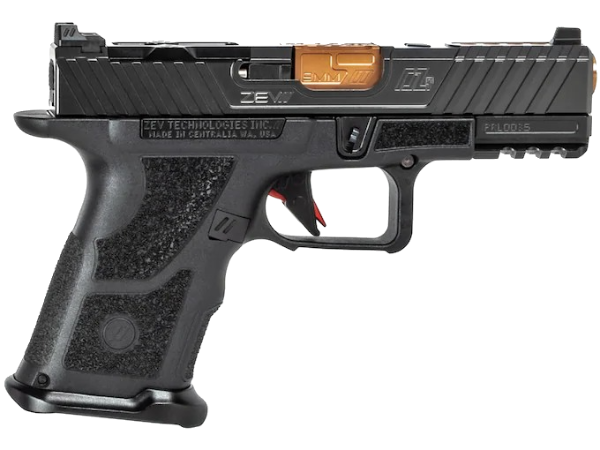
The debate between 9mm Luger and .45 ACP is settled for practical purposes. Modern 9mm defensive loads from companies like Federal, Speer, and Hornady offer terminal performance nearly identical to .45 ACP, with higher capacity, less recoil, and lower cost. A ZEV OZ-9C Hyper-Comp pistol, for example, delivers 124-grain +P ammunition with exceptional control and speed due to its compensator, making 9mm an even more effective choice. For duty, defense, or competition, 9mm is the dominant caliber. The .45 ACP retains its place for historical appeal and suppressor use with subsonic rounds, but for putting effective rounds on target quickly, 9mm is the pragmatic answer. Stock up on quality 9mm at Highbridgearmory.
Rifle Ammunition: Matching Round to Role
Selecting rifle ammunition requires defining the task. For long-range precision, you need high-BC match bullets like the 6.5 Creedmoor 140gr ELD-M from Hornady Custom Ammunition. For home defense or hunting in brush, a .300 Blackout firing a 110-grain V-MAX provides devastating close-range energy, especially from a short-barreled rifle. For general-purpose training and varmint control, bulk .223 Remington 55gr FMJ is the economical choice. The critical factor is twist rate. A 1:7″ twist barrel stabilizes heavy 77gr bullets, while a 1:12″ twist is best for lighter 55gr rounds. Using the wrong combination degrades accuracy. We match our rifles collection with appropriate ammunition listings for this exact reason.
Ammunition Storage, Reliability, and Sourcing
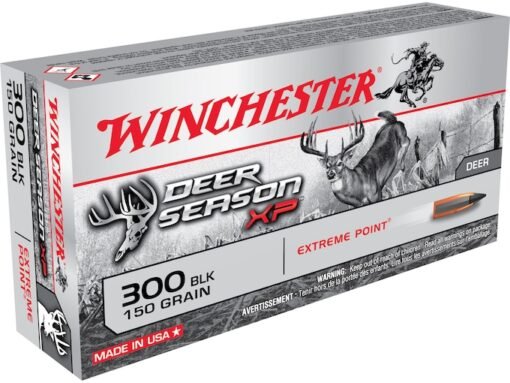
Ammunition is a component with a shelf life. Store it in a cool, dry place in its original packaging or in sealed ammo cans with a desiccant. Factory-loaded ammunition from reputable manufacturers like Winchester, Federal, and Hornady undergoes stringent pressure testing for reliability. Avoid remanufactured or suspect “reloads” for defensive use. When sourcing, consider the primer type. Magnum rifle cartridges often require Large Rifle Magnum Primers for consistent ignition in cold weather. For hunting, use ammunition designed for the game, such as Winchester Deer Season XP in .300 Blackout, which combines controlled expansion with deep penetration. A reliable supply chain is key, which is why we maintain deep inventory across calibers.
Niche Calibers and Future-Proofing Your Kit
While 9mm, 5.56mm, and .308 Win are the staples, niche calibers solve specific problems. The FN 5.7x28mm offers low recoil, high capacity, and armor-piercing potential from a pistol platform. 6.5 Grendel provides long-range ballistics from an AR-15 lower. When adopting a niche caliber, your primary concern is ammunition availability. Before investing in the firearm, secure a steady supply of ammo. Future-proof your kit by focusing on calibers with strong military, law enforcement, or competitive adoption, as these guarantee continued production. Diversify your training with affordable bulk calibers, but standardize your defensive tools around proven, available loads.
Can I shoot 5.56 NATO ammunition in a .223 Remington chamber?
No, you should not. While a 5.56mm round may physically fit, it operates at higher chamber pressure (approx. 62,000 psi vs. 55,000 psi). Firing 5.56 in a .223 chamber can cause excessive pressure, leading to primer cratering, case head separation, or catastrophic failure. Always use ammunition that matches or is below the specification stamped on your barrel. A .223 Wylde chamber is designed to safely fire both.
What’s the difference between Full Metal Jacket (FMJ) and Jacketed Hollow Point (JHP)?
FMJ ammunition has a lead core fully encased in a copper jacket. It’s for training and target shooting, as it offers minimal expansion and can over-penetrate. JHP ammunition has a hollow cavity in the nose designed to expand upon impact, creating a larger wound channel and transferring energy more efficiently to the target while reducing over-penetration risk. JHP is the standard for defensive and duty use.
How much ammunition should I keep on hand?
There’s no single answer, but a practical baseline is 1,000 rounds per primary firearm for training and 200-500 rounds of your chosen defensive load. This allows for regular practice and a reserve. For a common caliber like 9mm or 5.56mm, maintaining 2,000-5,000 rounds is not unreasonable for dedicated shooters. Store it properly, and rotate your stock using older ammo for training first.
Browse our firearms collection
Last updated: April 19, 2026